By Referral Only: Inside the Secret Tattoo Spaces Rewriting Who Gets the Best Ink
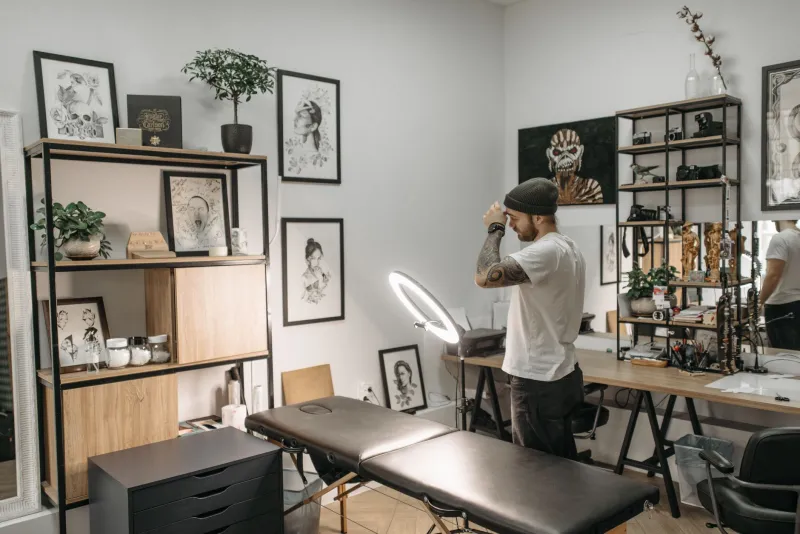
The address comes in a text message. No name on the building. You buzz in, walk up two flights, and find yourself in a space that looks more like a curated art studio than anything you'd associate with a tattoo shop — clean lines, soft lighting, a single chair, original artwork on every wall. The artist greets you by name. They already know your project. There's no intake form, no waiter-style upsell, no background noise from three other machines running simultaneously.
You were referred here by someone who was referred by someone else. That chain of trust is the only reason you're standing in this room.
This is the invitation-only tattoo studio. And it's more common than most people realize.
The Architecture of Trust
Private, by-referral tattoo spaces aren't new — artists have always worked out of home studios and private setups to varying degrees. What's new is the intentionality behind them. The artists building these spaces in 2024 and 2025 aren't doing it to cut corners or dodge regulations. They're doing it to build something that the traditional shop model, for all its virtues, has never been able to offer: complete control.
Control over clientele. Control over artistic direction. Control over environment, pace, and the texture of the entire experience.
"A traditional shop has to serve everyone who walks through the door to some degree," says one artist — we'll call her V — who operates a private studio in a major East Coast city and asked not to be named by location. "I don't have to do that. I can choose every single client I work with, which means I can build a body of work that's actually coherent. That's not arrogance. That's how every other serious artist in every other medium operates."
V's client list is somewhere around forty people. She has a two-year waiting list. She has never run a paid advertisement in her life.
Why Marginalized Artists Are Building This Way
Here's where the conversation gets more complicated and more important.
For many of the artists building private referral studios, the motivation isn't purely aesthetic. It's protective.
BIPOC artists, LGBTQ+ artists, women working in a field that has historically been hostile to all three — these are the people most likely to be building invitation-only spaces, and often for reasons that have nothing to do with exclusivity in the luxury sense.
Conventional tattoo shops, for all the progress the industry has made, can still be uncomfortable environments. Harassment from clients, hostile shop cultures, being undervalued or underpromoted despite exceptional skill — these are documented, persistent problems. A private studio controlled entirely by the artist eliminates most of those variables.
"I spent four years in shops where I had to fight to be taken seriously," says Dani Cruz, a tattoo artist in the Pacific Northwest who now works exclusively through a referral network she built herself. "I had clients who were surprised I was the artist. I had shop owners who gave my walk-ins to other artists. When I went private, all of that stopped. Every client who comes to me knows exactly who I am and specifically wants my work."
Dani's referral network functions largely through community — queer spaces, BIPOC community organizations, and word of mouth among clients who share her values. New clients are vetted not through formal interviews but through the implicit accountability of the referral chain. If you were sent by someone Dani trusts, that trust extends to you by default.
The Safety Dimension
For some artists and their clients, the invitation-only model isn't about prestige at all. It's about physical safety.
Transgender clients, abuse survivors, people with trauma responses to clinical environments — these are populations for whom a conventional tattoo shop can present genuine barriers. The noise, the strangers, the lack of privacy, the unpredictability of who might walk in off the street. Private studios remove those variables entirely.
Several artists who work specifically with these communities have built studios that function more like therapeutic spaces than conventional shops — trauma-informed practices, flexible session structures, explicit consent protocols built into every appointment.
"I have clients who have never been able to get tattooed in a public shop," says one artist who works out of a private space in the Midwest and asked to remain anonymous. "Not because they didn't want to. Because they couldn't. The environment was too much. In my space, they've gotten some of the most meaningful work of their lives."
The Wealth Divide Nobody Wants to Talk About
All of this is real, and all of it matters. But there's a tension at the center of the invitation-only model that deserves honest examination.
Access to the best artists in the country has always been unequal. Waitlists, geographic concentration in major cities, high prices — these barriers have always existed. The private referral model doesn't create inequality in tattoo culture. But it does formalize and deepen it in certain ways.
If the best artists are working exclusively through private networks, and those networks are built through existing community connections, then people who are already embedded in those communities benefit most. That's not inherently unfair — communities taking care of their own is a legitimate and important thing. But it does mean that access to exceptional work becomes increasingly dependent on who you know, which is a form of gatekeeping even when the gate is built for good reasons.
V acknowledges this tension directly. "I don't have a clean answer to it," she says. "I built this space to protect myself and do better work. That's real. But I also know that not everyone who deserves access to this kind of experience has a way in. I think about that."
Some artists are trying to thread this needle by maintaining small public-facing availability — a few slots per year open to applications from new clients with no referral required. Others have built mentorship pipelines that specifically bring emerging artists from underrepresented communities into private studio models, spreading access to the infrastructure rather than just the finished work.
The Future of the Floor
The traditional tattoo shop isn't going anywhere. Walk-in culture, flash days, the energy of a busy shop floor — these things have genuine value and they're not disappearing. But the private studio model is clearly becoming a significant and permanent feature of the industry's landscape.
Whether it represents liberation or stratification — or, more likely, both simultaneously — depends almost entirely on who's building the space, why they're building it, and who they're choosing to let in.
The referral chain is the thing. Follow it carefully.
And if you get the text with the address, show up ready.