Your Tattoo Was Stolen Before You Ever Walked Into the Shop
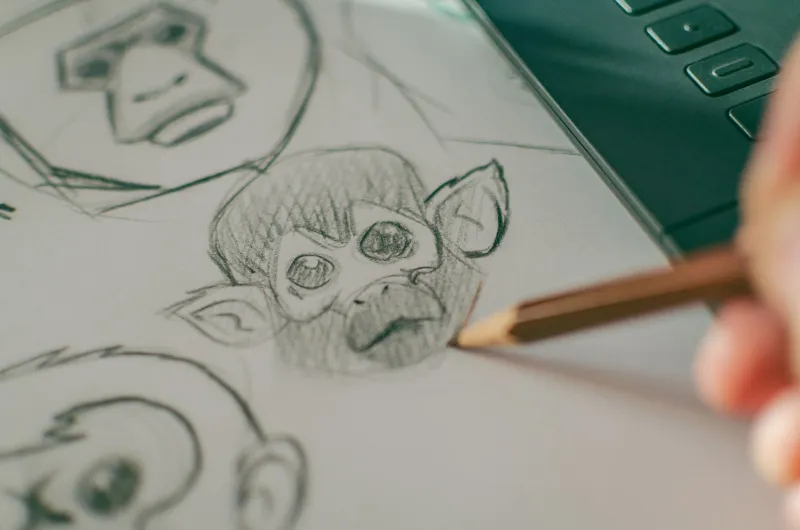
Somewhere right now, a tattoo artist is posting a flash sheet on Instagram. It took them weeks to design. The linework is precise. The concept is original. Within 48 hours, a shop three states away will screenshot it, print it out, and offer it to walk-in clients at a discount. The original artist will find out when a stranger tags them in someone else's work.
This is not a hypothetical. It happens constantly, and the tattoo industry — for all its talk of craft, legacy, and respect — has a design theft problem that it hasn't fully reckoned with.
How the Rip-Off Machine Works
The pipeline for stolen tattoo art is embarrassingly simple. An independent artist — often someone building their following on Instagram, TikTok, or Pinterest — posts their original designs publicly. A less scrupulous shop owner or artist screenshots the work, sometimes traces it digitally to make it look slightly different, and adds it to their available designs without credit or compensation.
The client sitting in the chair has no idea. They found the design online, brought it as reference, and are paying someone who had nothing to do with creating it. The original artist gets nothing — not money, not credit, not even a DM.
"It happened to me twice in one month," said Priya Anand, a custom tattoo artist based in Portland who specializes in botanical and geometric work. "Someone sent me a photo of their fresh tattoo asking if I'd done it. I hadn't. The design was mine, right down to the specific leaf arrangement I'd spent days refining. Someone had just... taken it."
The problem scales up fast when you factor in the merchandise side. Stolen tattoo designs regularly show up on print-on-demand sites — T-shirts, phone cases, stickers — sold by anonymous sellers who grabbed the artwork from social media and uploaded it to Redbubble or Etsy. Some artists have found their signature work generating revenue for strangers while they're still struggling to fill their booking calendar.
The Legal Swamp Nobody Wants to Wade Through
Here's where it gets complicated. Tattoo art is, technically, protected by copyright. The moment an artist creates an original design, they own it. That's been established in US courts, most notably in cases involving major brands that tried to use tattoo designs without permission and lost.
But enforcement is a different animal entirely.
Filing a copyright infringement claim requires time, money, and documentation. Most independent tattoo artists don't have the resources to pursue legal action against every shop that swipes their work. And the murky nature of digital reference culture — where clients bring in "inspiration images" and artists are expected to work from them — creates plausible deniability that's hard to pierce.
"The law is theoretically on our side," said Marcus Webb, an intellectual property attorney in Los Angeles who has represented several tattoo artists in infringement cases. "The practical reality is that most of these disputes aren't worth the cost of litigation unless the theft is egregious and ongoing. The industry needs better self-policing because the courts aren't a realistic solution for most artists."
The situation gets murkier when you add AI into the mix. AI image generators trained on scraped internet data have started producing tattoo designs that are suspiciously close to specific artists' styles — close enough to make the original creator's skin crawl, but legally difficult to challenge under current law.
The Artists Fighting Back
Some creators aren't waiting for the legal system to catch up. They're taking matters into their own hands, and they're getting creative about it.
Watermarking has made a comeback — not just as a subtle logo in the corner, but as a deliberate, integral part of how designs are shared online. Some artists now post only low-resolution previews, with full designs available only to paying clients or Patreon subscribers.
Others have built community-based accountability systems. Tattoo artist callout accounts on Instagram — some with significant followings — document theft publicly, naming shops and artists caught stealing. It's not perfect, and it can veer into mob territory, but it's produced real consequences: shops losing bookings, artists losing platform partnerships, and at least some deterrence for people who might otherwise see stealing as low-risk.
Priya Anand went a different route after her second theft. She started embedding nearly invisible details into her posted designs — a specific dot pattern, a particular curve — that doesn't affect the aesthetic but creates a fingerprint she can identify in stolen versions.
"It's not foolproof," she said. "But it gives me something concrete when I'm trying to prove the work is mine."
What You, the Client, Need to Know
If you're booking a tattoo based on something you found online, you have a role in this too. Not a malicious one — most clients have no idea they're participating in a theft — but a real one.
Before you book, try to trace your reference image back to its original source. Reverse image search is your friend. If the design you love was created by a specific artist, the most ethical move is to book with that artist directly, or at minimum, bring the reference to your chosen artist and ask them to create something original inspired by it rather than copied from it.
Ask your artist directly: is this your original work? If they're pulling from a flash book or a printed sheet, ask where those designs came from. A shop that takes design credit seriously will have answers. One that gets cagey or dismissive is telling you something.
Also worth noting: if you're buying tattoo-inspired merchandise online and the price seems weirdly low, check whether the seller has any verifiable connection to an actual artist. A lot of that merch is built on stolen work, and your ten-dollar sticker purchase is going directly to the person who took it.
The Culture Has to Decide What It Values
The tattoo world has always had a complicated relationship with originality. Flash art — standardized designs hung on shop walls — has been part of the culture since the beginning. Homage, influence, and evolution are baked into how the art form grows. No style exists in a vacuum.
But there's a difference between influence and theft. Between homage and copy-paste. Between a client bringing inspiration and an artist claiming someone else's original work as their own.
The industry is having that conversation louder than ever right now. Artist advocacy groups are pushing for clearer community standards. Platforms are (slowly, imperfectly) adding tools to help creators protect their work. And clients are becoming more aware — partly because the artists themselves are getting better at speaking up.
"I'm not trying to gatekeep tattoo culture," Priya Anand said. "I love that people love this art. I just want credit for what I made. That's not a big ask."