Cheap Ink, Expensive Consequences: What Really Happens When You Get Tattooed Abroad
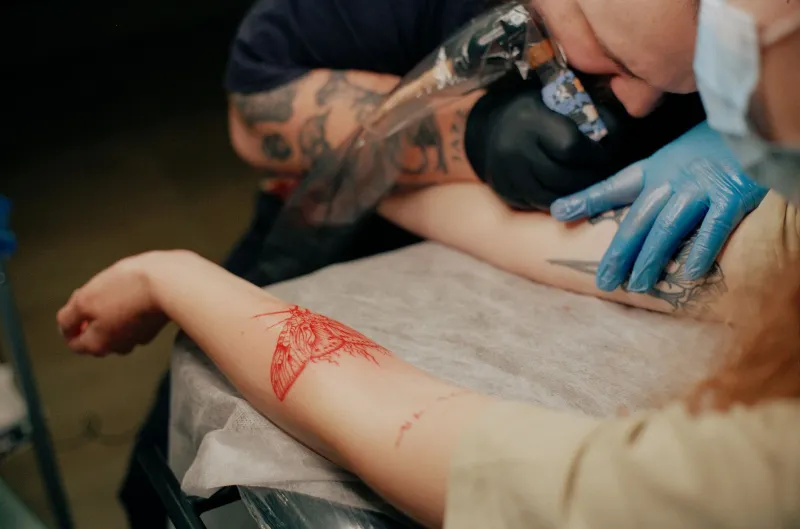
Kelsey booked her Bali trip with two goals: see the rice terraces and come home with a Balinese-inspired sleeve at a fraction of what it would cost in her hometown of Minneapolis. She got the rice terraces. She also got an infection that spread across her forearm within four days of returning to the US, landed her in urgent care, and cost her nearly $2,000 in treatment — roughly three times what she'd saved on the tattoo itself.
"I did research," she said. "I looked at the shop's Instagram. The photos looked great. I just didn't know what I didn't know."
Kelsey's story is not unusual. As tattoo tourism has exploded over the past several years — fueled by social media, falling flight prices, and the allure of culturally distinctive artwork at steep discounts — the number of Americans returning home with complications has climbed alongside it. The pictures get posted. The infections don't.
Why People Go and What They're Chasing
The appeal is obvious. In major US cities, a quality full-day tattoo session with a sought-after artist can run $1,500 to $3,000 or more. In Thailand, Indonesia, or Vietnam, comparable time in the chair — at least on paper — might cost a few hundred dollars. For someone planning an international trip anyway, the math seems to work.
Beyond price, there's an aesthetic draw. Traditional Thai sak yant tattoos, Japanese tebori work, Polynesian hand-tap techniques — these are art forms with deep cultural roots that many travelers feel they can only access authentically at the source. The idea of getting a tattoo in the place where the style originated carries a kind of romance that's hard to argue with.
And for a certain type of traveler, the tattoo becomes the souvenir — more permanent and more meaningful than anything you could pick up in a market stall.
The Health Risks Nobody Puts in the Caption
Dr. Renata Osei, a dermatologist in Atlanta who has treated multiple patients for tattoo-related infections acquired abroad, is direct about what she sees.
"The issues I encounter most often are infections from non-sterile equipment, allergic reactions to unregulated ink, and improper aftercare in environments that are genuinely difficult to heal in — high heat, high humidity, constant sun exposure," she said. "These aren't rare edge cases. I've had several patients this year alone."
The regulatory picture is a significant part of the problem. In the United States, tattoo shops operate under state-level health department oversight. Requirements vary by state, but they generally include sterilization standards, single-use needle mandates, and licensing requirements for artists. Enforcement is imperfect, but the framework exists.
In many popular tattoo tourism destinations, that framework is either absent, inconsistently enforced, or applied only to shops catering to local clientele — not the tourist-facing operations that spring up near beach resorts and backpacker hubs. A shop that looks clean and posts polished content can still be using reused needles, unregulated inks, or contaminated water in the dilution process.
Dr. Marcus Thorne, an epidemiologist at a university in Boston who has studied infection risks associated with medical and cosmetic tourism, puts it plainly. "The photogenic exterior of a shop tells you almost nothing about what's happening with sterilization protocols. And tourists, by definition, are not in a position to do the kind of due diligence that a local client might."
The consequences of a tattoo infection range from unpleasant to genuinely serious. Mild cases mean swelling, redness, and antibiotic treatment. Severe cases can involve abscesses, systemic infection, and in rare but documented instances, exposure to bloodborne pathogens if equipment wasn't properly sterilized. Kelsey got off relatively easy.
The Botch Job Problem
Infections aren't the only thing people bring home. Botched work — linework that bleeds, shading that falls apart as it heals, designs that look nothing like what was agreed on — is a constant thread in tattoo tourism horror story forums.
Part of this is communication breakdown. Booking a tattoo in a country where you don't speak the language and the artist's English is limited creates real risk of misunderstanding. What looks like a nod of comprehension during the consultation may be politeness, not confirmation.
Part of it is the economics of tourist-facing shops. When a shop's business model depends on volume — getting as many tourists through the door as possible before they fly home — the incentive structure doesn't favor the slow, careful work that a complex design requires. Rush jobs look fine in the shop. They fall apart in the weeks after.
And once you're back in Minneapolis or Atlanta or Denver, your options are limited. You can't exactly pop back in for a touch-up. You're stuck either living with it, covering it up, or paying a domestic artist to fix someone else's work — which is often more expensive than getting it done right the first time would have been.
The Cultural Appropriation Layer
Beyond health and quality, there's a conversation happening about the cultural dimension of tattoo tourism that some travelers find uncomfortable but shouldn't be able to ignore.
Traditional tattoo practices in many popular destinations — Polynesian pe'a, Thai sak yant, Māori tā moko — are not simply aesthetic styles. They're living cultural practices with spiritual significance, social meaning, and community protocols around who receives them and under what circumstances. The tourist version of these tattoos, offered quickly and cheaply to anyone with the cash, often strips all of that context away.
For many Indigenous and traditional communities, this isn't a minor irritation. It's a form of cultural extraction — taking something sacred, commodifying it, and sending it home on a foreigner's skin without any of the meaning that made it significant.
"There's a real difference between being invited into a cultural practice and buying a cheap version of it because it looks cool," said one Polynesian cultural advocate who spoke with us. "The tattoo industry in tourist destinations has gotten very good at selling the aesthetic without the context, and travelers need to think harder about what they're participating in."
How to Do This Without Wrecking Yourself
None of this means international tattoo experiences are inherently wrong. There are legitimate, skilled artists working in every country on earth, and some of the most technically gifted tattooers in the world are based in Asia, South America, and Europe. Booking with them — thoughtfully, with proper research — is a different thing entirely from walking into the nearest tourist-strip shop.
Do your homework before you leave home. Find the artist first, not the destination. Verify their sterilization practices directly — ask about autoclave use, single-use needle policy, and ink sourcing. Look for artists who have been vetted by the international tattoo community, not just shops with good TripAdvisor scores.
Plan your timing. Don't get a significant tattoo in the last few days of your trip. You want to be able to monitor how it heals before you board a long-haul flight, which is its own risk factor for swelling and infection.
And if you're drawn to a culturally specific style, do the deeper research. Find out whether there are protocols around that practice, whether outsiders are welcomed into it, and whether the artist you're considering is actually a practitioner of the tradition or just someone selling the look.
Kelsey's arm healed. The tattoo is still there, though the infection affected how parts of it settled. She's not done with tattoos — she's already planning her next one, with an artist in Minneapolis she found through a trusted referral.
"I'm not saying don't travel and don't get tattooed," she said. "I'm saying don't let the price tag be the thing that makes the decision for you. I learned that the hard way."