Sitting in the Chair Saved My Life: The Quiet Therapy Happening Inside Tattoo Shops Across America
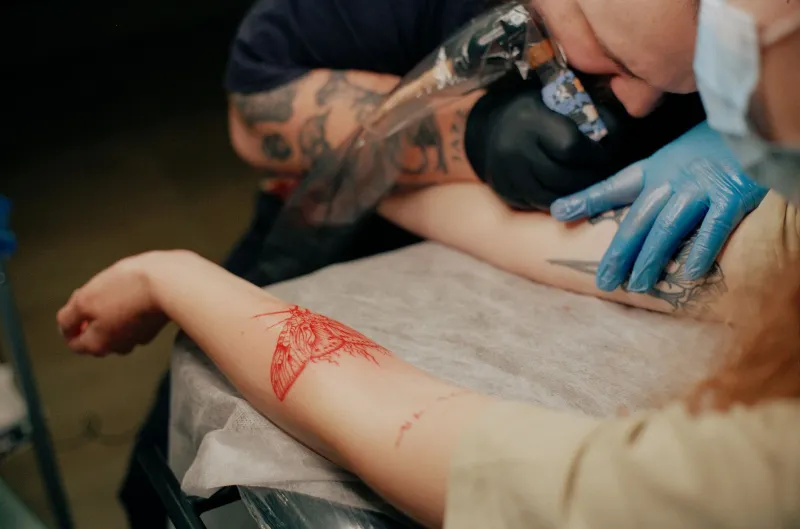
Marcus didn't go to therapy after his brother died. He went to a tattoo shop in East Nashville and sat in the chair for four hours while an artist named Deja pressed a portrait of his brother into the inside of his left forearm. He cried twice. He felt, for the first time in months, like he could breathe.
"I don't know how to explain it," he said. "It wasn't just the tattoo. It was the whole thing. The talking, the pain, the permanence. I walked out feeling like I had done something real with my grief instead of just sitting in it."
Marcus isn't alone. Quietly, without a press release or a wellness industry rebrand, tattoo shops across the country have become something unexpected: informal sanctuaries for people processing the heaviest stuff life throws at them.
Why the Chair Hits Different
There's a growing body of research suggesting that the experience of getting tattooed does something real to the brain. Dr. Lena Carver, a clinical psychologist based in Chicago who has worked with clients who use body modification as part of their coping toolkit, explains it this way.
"The act of choosing to undergo controlled pain — and then surviving it — creates a powerful psychological event," she said. "You're making a deliberate decision to feel something difficult, and then you endure it, and then it's over. That's actually a very healthy model for processing emotional pain."
The science backs her up. Studies on ritual behavior have long shown that structured, meaningful experiences — even uncomfortable ones — help people regulate emotion and create a sense of narrative control over their lives. Getting tattooed checks almost every box: there's anticipation, preparation, physical sensation, creative collaboration, and a permanent physical marker at the end. That's not nothing. That's actually a lot.
Dr. Carver is careful to note that tattoos aren't a replacement for clinical mental health care. But she acknowledges what's happening in shops across America is real, even if it's happening outside any formal system.
"I've had clients describe their tattoo experiences with more emotional clarity than anything they've talked about in session," she said. "There's something about that environment that lowers defenses."
The Artist as Accidental Counselor
Ask any veteran tattoo artist and they'll tell you: the chair becomes a confessional. People talk. Really talk.
Jamie Reyes, who runs a custom shop in Albuquerque and has been tattooing for fourteen years, says she's heard things in her studio that would make a therapist take notes.
"I've had people come in to cover scars — self-harm scars, surgical scars, accident scars — and by the end of the session they're telling me about the worst day of their life," she said. "I'm not trained for that. But I listen, and I think sometimes that's what they needed."
This phenomenon has a name in academic circles. Researchers studying what they call "therapeutic tattooing" have documented how the combination of physical intimacy, creative collaboration, and sustained one-on-one attention creates conditions unusually similar to a therapeutic alliance — the term used to describe the trust between a therapist and client that makes healing possible.
For people who can't afford therapy — and let's be honest, in America that's a lot of people — the tattoo chair may be filling a gap that the healthcare system has left wide open. The average therapy session in the US runs between $100 and $250 without insurance. A small tattoo from a solid artist? Comparable price, but you get something you keep forever.
Grief, Identity, and the Permanent Marker
The most common thread in stories like Marcus's is permanence. There's something about making a decision that cannot be fully undone — or at least not easily — that carries psychological weight.
Dr. Carver calls it "somatic anchoring." The tattoo becomes a physical landmark for an emotional moment. A way of saying: this happened, it mattered, and I'm still here.
This shows up especially in grief. Memorial tattoos have existed for as long as the art form itself, but the intentionality behind them has deepened. People aren't just getting a name or a date anymore. They're working with artists to design pieces that capture something true about the person they lost, and the process of doing that — describing someone you loved to an artist who never met them — can be its own kind of eulogy.
Similarly, tattoos tied to identity milestones — transitions in gender, sobriety anniversaries, survival of illness or abuse — carry a therapeutic function that goes beyond decoration. They mark the before and after. They say: I was one thing, now I am another, and my body knows it.
"I got tattooed the day after I left a really bad relationship," said one woman from Atlanta who asked to remain anonymous. "It sounds impulsive, but it wasn't. I'd been thinking about it for months. And when I walked out of that shop, I felt like my body belonged to me again. That mattered."
The Community Factor Nobody Talks About
Beyond the chair itself, the tattoo world has a community infrastructure that quietly supports people in ways that go unnoticed from the outside.
Regular clients become part of a shop's extended family. Artists remember people's stories. Booking a follow-up appointment gives someone something to look forward to when everything else feels heavy. The culture of tattoo — its emphasis on self-expression, acceptance of unconventional bodies, and general disdain for judgment — creates an environment where a lot of people feel genuinely seen for the first time.
For people who've felt alienated from mainstream wellness culture — its expense, its aesthetic, its frequent whiteness and thinness — the tattoo shop can feel like the only room where they don't have to explain themselves.
The Limits of the Chair
None of this means tattoo artists should be doing therapy. They shouldn't, and most of them will tell you that themselves. The emotional weight that lands in a shop can be a lot to carry, and there's a growing conversation in the tattoo community about artist burnout and the need for clearer boundaries.
Jamie Reyes says she's started keeping a list of mental health resources she can quietly hand to clients when a session goes somewhere heavy. "I care about the people in my chair," she said. "But I'm not their therapist. I'm their artist. Those are different things."
Dr. Carver agrees. The therapeutic value of tattooing is real, she says, but it works best as a complement to — not a substitute for — actual clinical support when someone needs it.
Still, she doesn't dismiss what's happening in shops like Jamie's. "If someone is processing grief or trauma and the ritual of getting a tattoo helps them move through it," she said, "that's meaningful. We don't have to medicalize everything to recognize that it matters."
Marcus still has the portrait of his brother on his arm. He eventually did start seeing a therapist, about eight months after that session in Nashville. But he's clear about the order of operations.
"The tattoo got me to a place where I could talk about it," he said. "I don't know if I would've gotten there any other way."