Skin Deep, Soul Loud: How the Tattoo Became America's Most Powerful Personal Statement
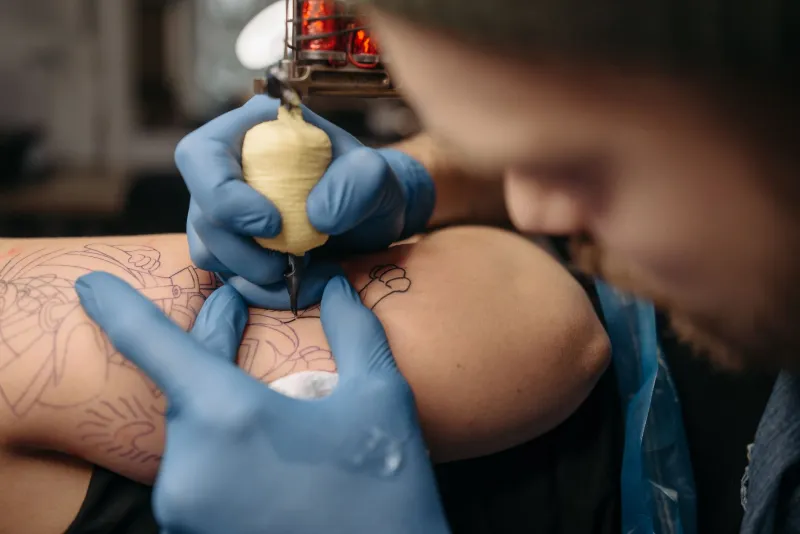
There's a moment in every tattoo appointment — right after the needle first bites into skin — where something shifts. It's not just pain. It's something closer to ownership. A quiet, electric declaration that says: this body is mine, and I decide what it says.
For millions of Americans, that moment has become almost ritualistic. And the numbers back it up. According to a 2023 Pew Research survey, nearly four in ten U.S. adults under 40 have at least one tattoo. That's not a fringe movement. That's a cultural revolution wearing short sleeves.
From Fringe to Front Page
Go back fifty years and the math looked completely different. Tattoos in mid-century America were largely the domain of merchant marines, carnival workers, military veterans, and motorcycle clubs. They were signals — sometimes of toughness, sometimes of belonging, sometimes of a life lived deliberately outside polite society. Your grandmother probably side-eyed anyone who had one.
Then punk happened. Then hip-hop. Then the internet.
Each cultural wave pushed tattooing a little further toward the center of American life. By the early 2000s, reality TV shows like Miami Ink and LA Ink were pulling tattoo culture out of the back-alley shop and into prime time. Suddenly, the tattoo artist wasn't a shadowy figure — they were a storyteller, a craftsman, a celebrity. The stigma didn't disappear overnight, but it started cracking.
Today, a tattoo sleeve is as likely to belong to a kindergarten teacher as a biker. A face tattoo might be on a Grammy winner or a TikTok creator with ten million followers. The old gatekeepers of respectability have largely given up trying to hold the line.
Why Now? The Psychology of Permanent Rebellion
So what's actually driving this? Why have Gen Z and millennials — generations that grew up drowning in digital noise, algorithmic identities, and curated online personas — gravitated so hard toward something as permanent and physical as a tattoo?
Dr. Priya Mehta, a cultural psychologist based in Chicago who has studied body modification trends, puts it plainly: "There's a deep hunger for something real. These generations have grown up in spaces where identity feels constantly performed and constantly shifting. A tattoo is one of the few things you can do that is unfiltered, unedited, and entirely yours."
That permanence isn't a bug — it's the whole point. In a world where your Twitter bio can change in thirty seconds and your aesthetic can pivot with a new Pinterest board, a tattoo says something different. It says: I was here. I believed this. I chose this.
For many young Americans, that act of choosing is itself the rebellion. Not rebellion against their parents, exactly, or even against society in some abstract sense — but against the idea that identity is something you perform for an audience rather than something you carve out for yourself.
The Democracy of Ink
One of the most underappreciated parts of the tattoo boom is how genuinely cross-cultural it's become. Walk into a well-regarded shop in Austin, Brooklyn, or Atlanta and you'll find clients from every conceivable background sitting in the same chairs, flipping through the same portfolios.
Marcus Williams, a tattoo artist with twelve years of experience running a shop in Atlanta's Old Fourth Ward, has watched this play out firsthand. "When I started, there were still pretty clear lanes," he says. "Black clients came in for certain styles. White clients came in for others. Now it's completely mixed up — in the best way. People are pulling from Japanese traditional, West African symbolism, Chicano lettering, watercolor, blackwork. It's all on the table."
That blending isn't just aesthetic. It reflects something broader happening in American culture — a generation that grew up online, surrounded by global influences, and that doesn't feel bound by the same cultural borders their parents navigated. Tattooing has become one of the spaces where that fluidity gets expressed most visibly.
It's also become more financially accessible than it used to be. While a full sleeve from a sought-after artist can still run thousands of dollars, the explosion of talented artists at every price point means that body art is no longer exclusively for the wealthy. Flash days, apprentice specials, and community-focused shops have opened the door for people who might never have considered it attainable.
The Body as Autobiography
Ask almost anyone with significant ink why they got their tattoos, and you'll rarely hear a simple answer. What you'll hear instead is a story.
Jessica Tran, a 28-year-old nurse from Houston, has seventeen tattoos — including a half-sleeve dedicated to her Vietnamese heritage and a small lotus flower she got the week she finished her first year of nursing school. "Every single one of them is a chapter," she says. "My body is basically a timeline of everything I've survived and everything I'm proud of. I wouldn't trade that for anything."
That biographical impulse is one of the things that separates contemporary tattoo culture from its predecessors. The old school biker got a tattoo to signal membership. Today's collector gets inked to narrate a life. The tattoo has evolved from a badge into a language — and Americans are using it to write some pretty compelling sentences.
What the Haters Still Get Wrong
Despite everything, the resistance hasn't fully disappeared. Hiring managers still sometimes hesitate at visible ink. Certain family gatherings still involve someone's aunt making a pointed comment. The military still has policies. The corporate world still has dress codes, even if they're loosening.
But here's the thing the critics consistently miss: the people getting tattooed largely don't care about their approval anymore. That's not nihilism — it's confidence. It's a generation that has decided, collectively, that living an authentic life is worth more than living a comfortable one by someone else's standards.
And honestly? That's pretty punk rock. Even if the tattoo in question is a tiny crescent moon on a wrist, done in the cleanest fine-line style you've ever seen.
The Revolution Will Be Illustrated
Tattooing in America isn't just a trend. It's not a phase. It's a permanent (pun absolutely intended) shift in how a generation understands identity, ownership, and self-expression.
The needle keeps moving. The ink keeps flowing. And every person who sits down in that chair and makes the choice to mark themselves is participating in something that's been building for decades — a quiet, beautiful insistence that the human body is a canvas, and that the person living in it gets to decide what story it tells.
Ink deep. Live loud. You know the rest.