Scroll, Watch, Tattoo: Is Social Media Killing the Apprenticeship or Setting It Free?
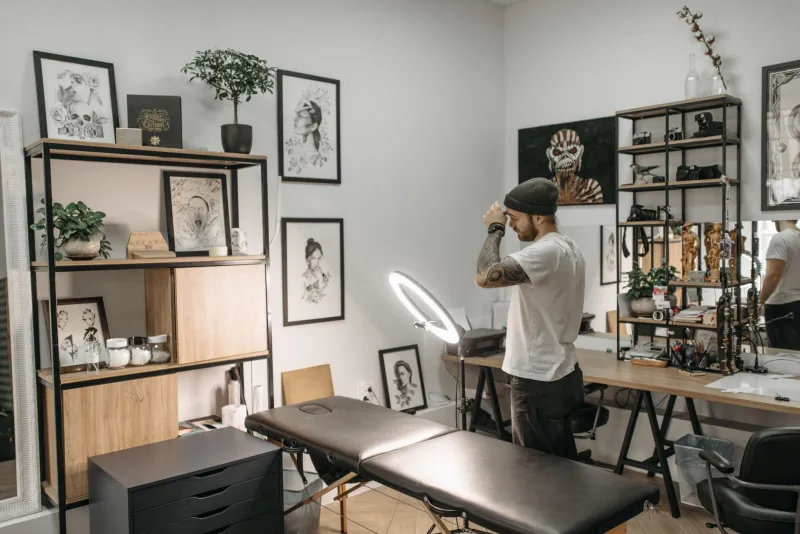
There was a time — not that long ago — when becoming a tattoo artist meant years of earning it the hard way. You swept floors. You mixed ink. You watched in silence while a seasoned artist worked a full sleeve on a client who'd been coming in for three years. You didn't touch a machine until someone with calloused hands and a wall full of flash decided you were ready. That was the deal. That was the culture.
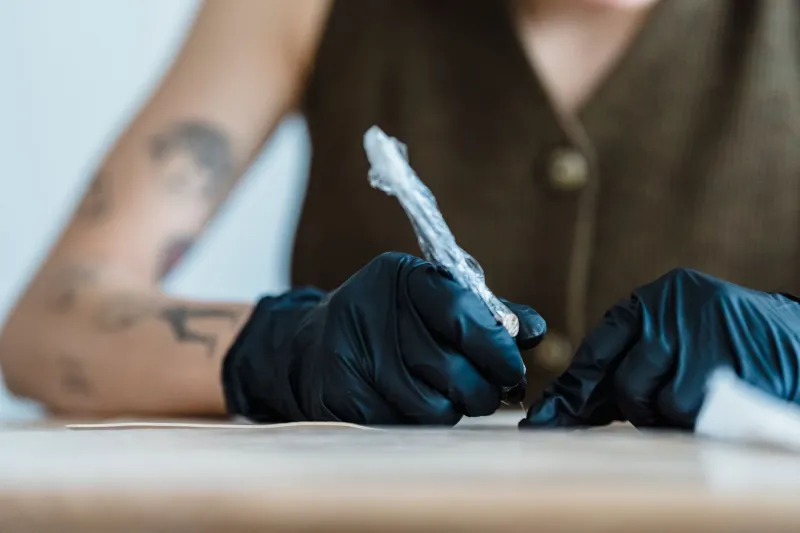
Now? A 19-year-old in Ohio can watch 400 hours of tattooing content on TikTok, buy a beginner kit off Amazon, practice on fake skin for six months, and start booking clients out of their apartment. No shop. No mentor. No dues paid.
And the industry has absolutely no idea how to feel about that.
The Old System Was Brutal — and Kind of the Point
Veteran artists will tell you the apprenticeship wasn't just about learning technique. It was about learning respect — for the craft, for the client, for the lineage of people who bled to build this industry's legitimacy before it was cool.
Marcus Webb, a 22-year shop owner out of Atlanta who's trained four apprentices over the past decade, puts it plainly: "The grunt work wasn't hazing. It was education. When you're cleaning up after a full day of tattooing, you're learning what the job actually is. You're seeing healed work, fresh work, bad work. You're absorbing things you can't get from a YouTube video."
That immersive, almost monastic process produced some of the most technically sharp artists in American tattoo history. The apprenticeship system was also, admittedly, deeply flawed — gatekept by personal connections, riddled with favoritism, and often downright exploitative. Unpaid labor stretching two or three years wasn't uncommon. If you didn't know the right people or walk into the right shop, the door simply didn't open.
So when social media kicked that door off the hinges, not everyone was sad to see it go.
The TikTok Generation Doesn't Wait for Permission
Dani Reyes started tattooing out of her bedroom in Phoenix at 20. She never had a mentor. She learned by watching. She now has 47,000 Instagram followers and a three-month waitlist.
"I applied to six shops for apprenticeships," she says. "Either I never heard back, or they wanted me to work for free for two years while I had rent to pay. I couldn't afford to wait for someone to decide I was worthy. So I taught myself."
Her story isn't unusual anymore. Across the country, a generation of artists is bypassing traditional pipelines entirely, building portfolios on social media before they've done their hundredth tattoo. Platforms like TikTok have created a new kind of credibility — follower counts, viral reels, aesthetic branding — that can fill a booking calendar faster than a decade of shop experience ever could.
For clients, especially younger ones, the math sometimes checks out. A self-taught artist with a polished Instagram grid and a distinct visual style can be more appealing than a shop-trained veteran whose portfolio looks like it hasn't evolved since 2009.
But there's a catch, and it's written in permanent ink.
When the Gaps Show Up — They Show Up on Someone's Skin
Technique isn't just about making something look good on day one. It's about understanding skin depth, ink saturation, how different skin tones hold color, how a tattoo is going to age over five, ten, twenty years. That kind of knowledge isn't in a TikTok comment section.
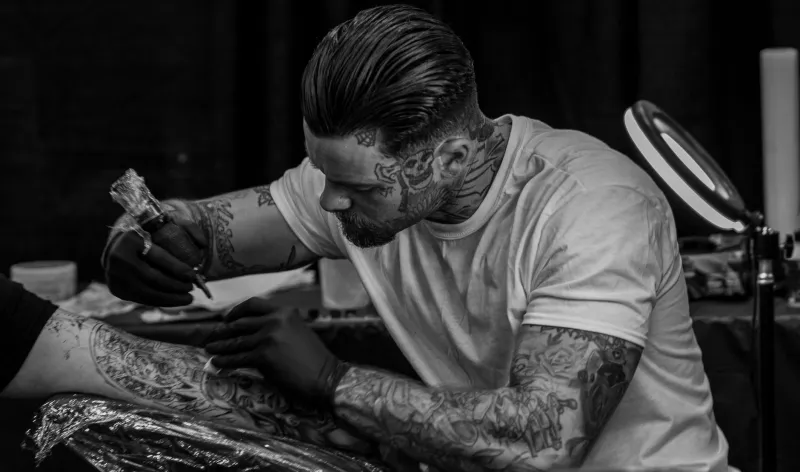
Industry veteran and convention circuit regular Tasha Bloom has seen the fallout firsthand. "I'm getting more cover-up requests than ever," she says, "and a lot of them are from people who went to newer artists who had beautiful portfolios but clearly didn't understand the fundamentals. The tattoo looked great in the photo. Two years later, it's a blown-out mess."
This is the tension that's cracking the industry right down the middle. Social media has created a visual standard that's sky-high — the work that goes viral is genuinely stunning. But the gap between what looks good in a freshly-healed photo and what holds up over time is exactly where traditional training lives.
And it's a gap that no amount of scrolling can fully close.
The Shops Caught in the Middle
For working shop owners, the social media era has created a recruitment nightmare with no clean answer. The apprenticeship model they built their careers on is harder to maintain when young artists have a faster route to income. And if they do take on an apprentice, there's no guarantee that person won't build a following, go independent, and compete with the shop that trained them — sometimes within a year.
"I had a kid come in, great attitude, real talent," says Webb. "Six months into the apprenticeship he had 12,000 followers and was taking side clients at home. I had to let him go. That's not how this is supposed to work, but I don't totally blame him either. The incentives changed."
Some shops are adapting — creating paid apprenticeship programs, shortening timelines, building mentorship structures that feel less like indentured servitude and more like actual education. A few are leaning into the social media angle entirely, using their apprentices as content creators while they train. It's messy, but it's movement.
A Craft at a Crossroads
Here's the honest truth: the apprenticeship system needed to change. It was gatekeeping real talent, especially from artists who weren't already plugged into the right communities. Social media has genuinely democratized access to inspiration, education, and audience-building in ways that have made the art form richer and more diverse.
But democratization doesn't automatically mean quality. It means access. And access without foundation is where the problems start — not just for the industry's reputation, but for the actual humans walking around with permanent marks on their bodies.
The artists who are going to thrive in this new era are probably the ones doing both — building their brand online and putting in the technical work, whether that's through a formal apprenticeship, a paid mentorship, or years of obsessive self-study that goes way deeper than what the algorithm serves up.
The machine doesn't care how many followers you have. Skin doesn't lie.
And twenty years from now, every tattoo tells its own story about who put it there — and whether they really knew what they were doing.