Beyond the Needle: How Tattoo Artists Are Building Six-Figure Empires Without Leaving Their Lane
For decades, the tattoo industry operated on a pretty simple equation: show up, ink skin, collect cash, repeat. The shop was the kingdom, the owner was the king, and artists who wanted a piece of something bigger had to either buy their way in or grind until their hands gave out. That model isn't dead — but it's got serious competition.
A new generation of tattoo artists is quietly — and sometimes loudly — building financial empires that extend way past the chair. We're talking merchandise drops that sell out in hours, online education platforms pulling five figures a month, NFT collections that turned digital art into real-world cash, and brand sponsorships that rival what influencers in fashion and fitness are pulling. These aren't side gigs. For a growing number of artists, the chair is just the foundation.
The Old Model Had a Ceiling
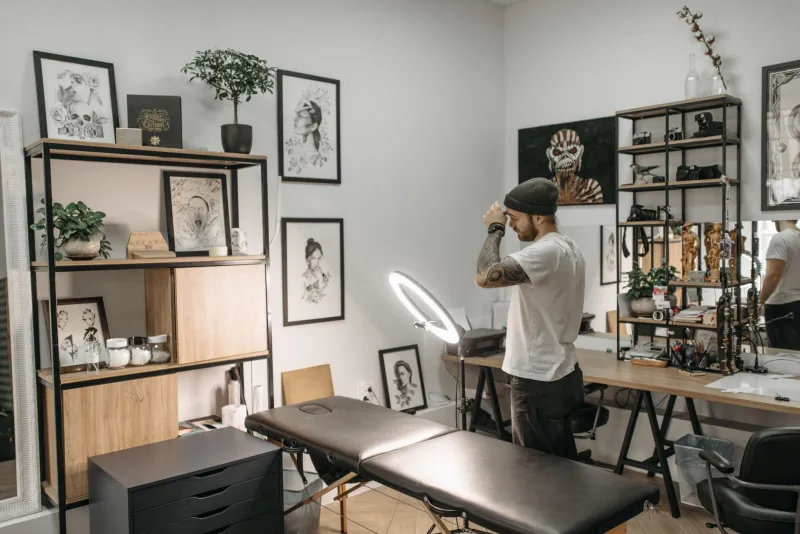
Let's be honest about something: the traditional shop structure was never designed to make artists wealthy. You rented a chair, split your earnings with the house, worked walk-ins between appointments, and hoped the shop's reputation was strong enough to keep you booked. If you were lucky, you eventually opened your own spot — and then you were the one paying everyone else's rent.
That ceiling frustrated a lot of talented people. And when social media handed every artist a direct line to millions of potential fans and clients, something shifted. The gatekeeping model started cracking.
Instagram and TikTok didn't just give artists exposure. They gave them leverage. Suddenly, a tattooist in Tulsa with 200,000 followers didn't need a shop on a busy street to stay booked solid. They could run their own private studio, set their own rates, and still have a waitlist stretching six months deep.
Merch That Moves
One of the first revenue pivots artists figured out was merchandise. Prints, stickers, apparel, flash sheet books — it sounds simple, but the execution matters. Artists who built genuine communities around their work found that their audience wanted to wear their aesthetic, hang their designs on walls, and carry a piece of their vision into daily life.
Drops modeled after streetwear culture — limited runs, announced with hype, gone in minutes — became a reliable income source for artists with loyal followings. Some artists are doing five to ten thousand dollars in a single merch drop weekend, no shop split required. The margins on digital art prints are even cleaner. Zero inventory, zero shipping headaches for the artist, and the work sells while they sleep.
Teaching the Trade (And Getting Paid for It)
Here's where things get really interesting. Some of the most financially successful artists right now aren't just tattooing — they're teaching. Online courses, mentorship programs, Patreon memberships with exclusive content, and private workshops have become serious income engines.
The demand makes sense. There are thousands of aspiring tattoo artists across the country who can't land a traditional apprenticeship, either because the local shops aren't taking anyone on or because the apprenticeship model itself is notoriously gatekept and sometimes exploitative. Artists who've cracked their own style and built a following have figured out that their knowledge is a product — and the market for it is enormous.
A well-produced online course on, say, fine-line technique or blackwork shading can sell for anywhere from $150 to $500 a seat. An artist with 50,000 engaged followers launching a course to even a fraction of that audience isn't doing math — they're printing money. And unlike a tattoo, which requires their physical presence, a course keeps selling long after it's built.
The NFT Experiment (Yes, It Still Has Legs)
The NFT wave crashed hard enough that the word became a punchline in some circles. But for tattoo artists who moved early and smart, it opened doors that haven't fully closed. Digital collectibles tied to original artwork, exclusive community access, and real-world tattoo perks gave collectors something tangible to chase.
Some artists used NFT drops as a way to fund private studios, buy equipment, or bankroll their own merchandise lines — essentially crowdfunding their next chapter through their most dedicated fans. Others built ongoing communities around their digital work that kept generating income and attention well after the initial hype faded.
The lesson wasn't that NFTs were a gold rush. It was that artists willing to experiment with emerging platforms could find entirely new audiences who valued their work in ways the traditional tattoo industry never would.
Brand Deals and Sponsored Content
Tattoo artists with serious social followings are landing sponsorships from brands you wouldn't necessarily expect — ink manufacturers, obviously, but also skincare companies, apparel brands, energy drinks, and lifestyle products that want to borrow the credibility and edge that tattoo culture carries.
This isn't selling out. At least, not in the way the old guard might frame it. Artists are selective about what they co-sign, and the ones who protect their authenticity tend to build stronger long-term partnerships. A sponsored post from an artist with a devoted, engaged audience hits differently than a generic influencer ad. Brands know this. The rates reflect it.
For an artist already producing regular content — time-lapses of their work, behind-the-scenes studio footage, tutorials, personal storytelling — layering in a brand partnership is a natural extension. The content was already happening. Now it pays double.
Private Commissions: The Quiet Big Money
Then there's the quiet money: private custom commissions that never get advertised publicly. Artists with strong reputations and enough leverage to name their price are doing commission work — custom flash designs, exclusive artwork for collectors, even consulting for brands wanting tattoo-inspired visual direction — at rates that dwarf what they'd make in the shop.
A single custom design package for a high-end client can run anywhere from $500 to several thousand dollars. For artists who've cultivated that clientele, it's consistent, low-overhead income that requires nothing but their creative skills and a good email thread.
The Street Credibility Question
Some old-school voices will argue that all this business hustle dilutes what tattooing is supposed to be — raw, rebellious, rooted in craft. And honestly? That tension is real. Not every artist who builds a brand does it with integrity. Some chase clout over quality, and it shows.
But the artists who are actually winning long-term are the ones who kept the work at the center. The merch sells because the tattoos are fire. The courses sell because the technique is undeniable. The sponsorships land because the audience trust is earned. The business model follows the art — not the other way around.
That's not selling out. That's what it looks like when someone who's been undervalued for years finally figures out how to get paid what they're worth.
The Bottom Line
The tattoo industry has always been built on hustle. What's changed is the toolkit. Artists today have access to platforms, audiences, and revenue models that didn't exist fifteen years ago — and the smartest ones are using every single one of them.
The six-figure tattoo artist isn't a myth anymore. And increasingly, the path to that number doesn't run through a shop owner's permission slip. It runs through a phone camera, a loyal following, and the willingness to treat your art like the business it always deserved to be.