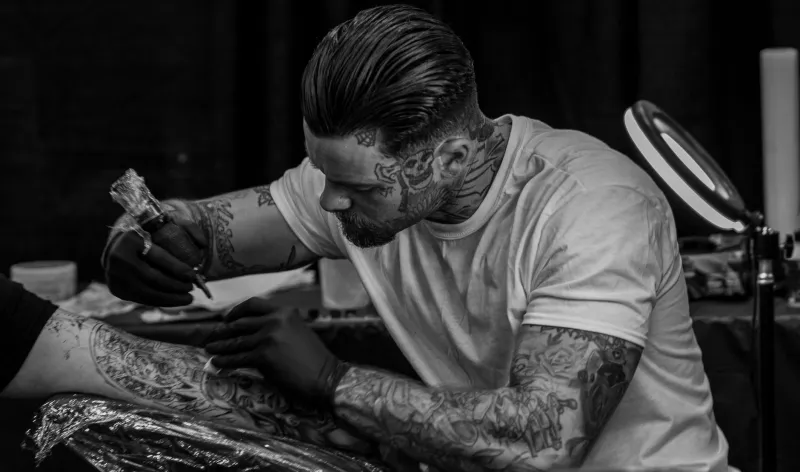
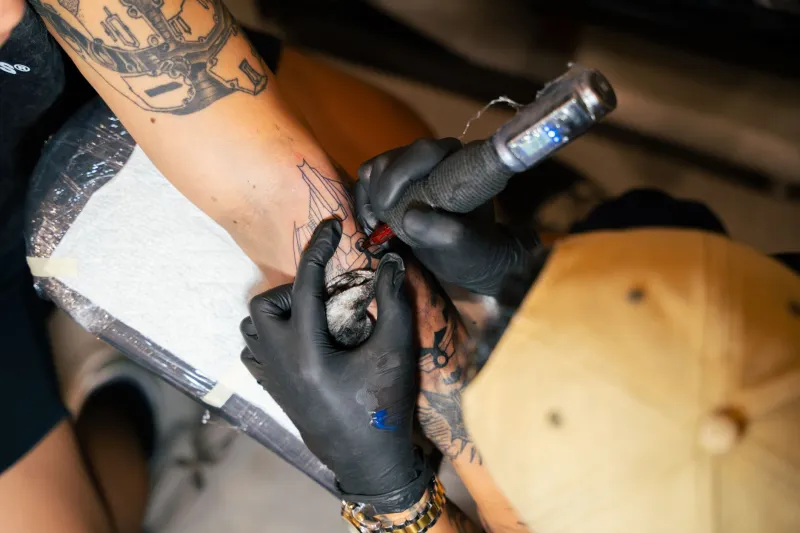
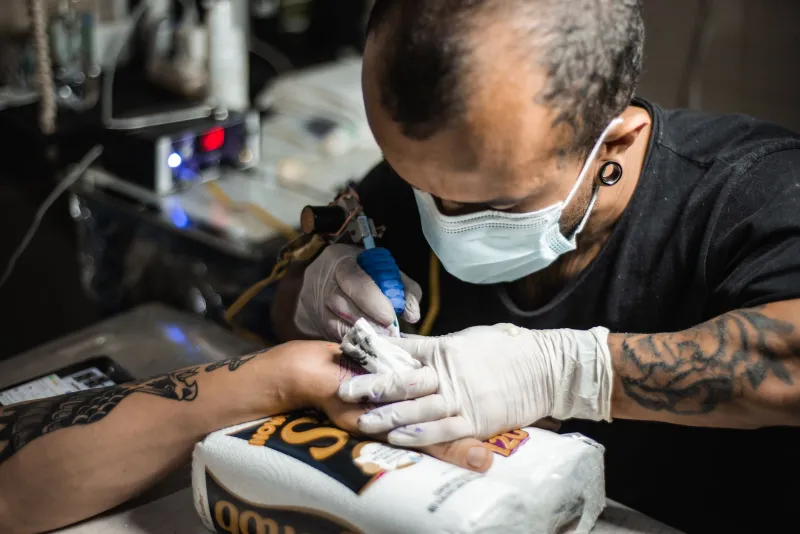
Blood In, Ink Out: The Secret Apprenticeship Pipeline Producing Tomorrow's Tattoo Legends
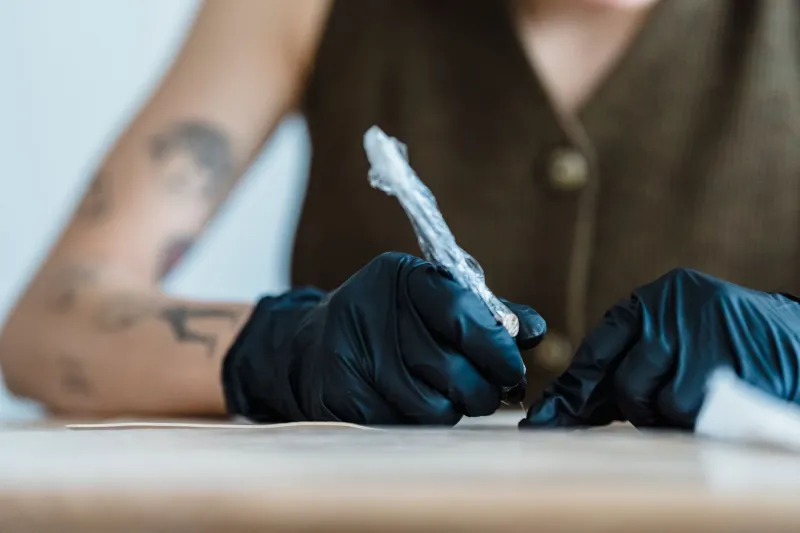
There's no application portal. No tuition payment plan. No diploma waiting at the end. The most serious tattoo education you can get in the United States doesn't exist on any accredited curriculum — it lives in the handshake between a master artist and a kid who's willing to sweep floors, mix ink, and absorb everything like their career depends on it. Because it does.
The traditional apprenticeship model in tattooing is having a full-blown renaissance, and most people outside the industry have absolutely no idea it's happening.
Why the Old Way Is the New Way Again
For a stretch in the early 2000s and into the 2010s, the tattoo world got flooded. Reality TV turned the craft into entertainment. Cosmetology-adjacent tattoo schools started popping up across the country, cranking out certificates in weeks. The barrier to entry dropped, and the industry felt it. Not in a good way.
Now, the pendulum is swinging back hard. Established artists — the ones with fifteen, twenty, thirty years behind the machine — are getting selective. Real selective. They're looking for apprentices the way old-world craftsmen once looked for proteges: with patience, skepticism, and an almost obsessive focus on character over credentials.
"I turned down forty-two people last year," says Marcus Webb, a Philadelphia-based traditional artist who's been tattooing since 1998. "I'm not running a class. I'm building a lineage. There's a difference."
That word — lineage — keeps coming up in conversations with artists who take apprentices seriously. It's not just about technique. It's about passing down a philosophy, a set of values, a way of seeing skin as a canvas that demands respect.
What a Real Apprenticeship Actually Looks Like
Here's the unglamorous truth: a legitimate apprenticeship is brutal. Most apprentices spend the first several months doing exactly zero tattooing. They're cleaning stations, stretching and prepping surfaces, watching — constantly watching — and learning the business of a shop before they ever get near a client.
Jordan Reyes, a 24-year-old apprentice working under a well-known Chicano-style artist in East Los Angeles, describes her first four months as "basically being a really dedicated intern who also studies anatomy at midnight."
"My mentor had me drawing every single day. Not tattooing. Drawing. He'd check my sketchbooks every week and tell me exactly what was wrong. It was humbling in a way that no classroom could ever replicate."
The learning curve is steep and intentionally so. The idea is that by the time an apprentice touches a real client, they've already internalized the weight of the responsibility. Skin doesn't erase. Mistakes live on bodies forever. That reality gets drilled in early.
Most legitimate apprenticeships run anywhere from one to three years. Some go longer depending on the style and the mentor's standards. The apprentice typically works for little or no pay during the early phases, sometimes compensating through shop duties, assisting with conventions, or handling social media and admin work.
The Line Between Mentorship and Exploitation
Here's where it gets complicated, and it's worth saying plainly: not every "apprenticeship" is legitimate. The lack of regulation in this space creates real opportunity for abuse.
There are shops out there offering apprenticeships that are really just unpaid labor arrangements with no actual education attached. The apprentice cleans, answers phones, maybe runs errands — and learns almost nothing. Months pass. Skills don't develop. The "mentor" collects free help and the apprentice collects resentment.
So how do you tell the difference? Artists who've been around the block offer a few markers to watch for.
A real mentor has a clear, communicable teaching philosophy. They can articulate what they're going to teach you and roughly how. They have a track record — previous apprentices who went on to build real careers. They're not asking you to do anything that doesn't connect back to your development as an artist.
"If someone can't name a single person they've trained who's now working professionally, that's a red flag," says Webb. "Lineage goes both directions. You should be able to trace it forward and backward."
Apprentices should also be cautious about arrangements that feel financially extractive — shops that charge hefty "apprenticeship fees" upfront without clear deliverables are operating in murky territory. The established norm in reputable shops is that the apprentice provides labor and loyalty; the mentor provides knowledge and access.
The Knowledge You Can't Google
What separates a master-trained artist from someone who learned via YouTube tutorials and practice skins? Ask any serious collector and they'll usually give you the same answer: presence. Confidence. The ability to read a body, adjust in real time, and make decisions under pressure that protect both the art and the client.
That kind of knowledge doesn't transfer through a screen. It comes from standing next to someone who's seen every complication, every difficult skin type, every client who wants something that won't age well — and watching how they navigate it.
"You learn to see what I see," explains Denise Okafor, a New Orleans-based artist who specializes in blackwork and has trained three apprentices over the past decade. "And that takes proximity. Time. Repetition. There's no shortcut."
Okafor's apprentices also learn the cultural and historical context of the styles they're working in — something she considers non-negotiable. Understanding where a technique comes from, who developed it, and what it means isn't just academic. It informs every creative decision.
The Future of Tattoo Education
The apprenticeship underground isn't going away. If anything, it's growing more intentional, more structured in its own unstructured way. Online communities are forming around the model — forums and private groups where apprentices share resources, compare notes, and vet potential mentors. Some established artists are beginning to formalize their programs slightly, creating loose curricula while maintaining the hands-on core.
What's clear is that the tattoo world's most serious practitioners are doubling down on the idea that mastery can't be manufactured. It has to be earned, slowly, in the presence of someone who's already paid their dues.
For the young artists willing to commit to that process — to sweep the floors, absorb the criticism, and trust the grind — the reward is something a certificate can never provide: a real place in a real lineage.
And in tattoo culture, that means everything.