Breaking Barriers and Building Legacies: The BIPOC Artists Rewriting Tattoo History
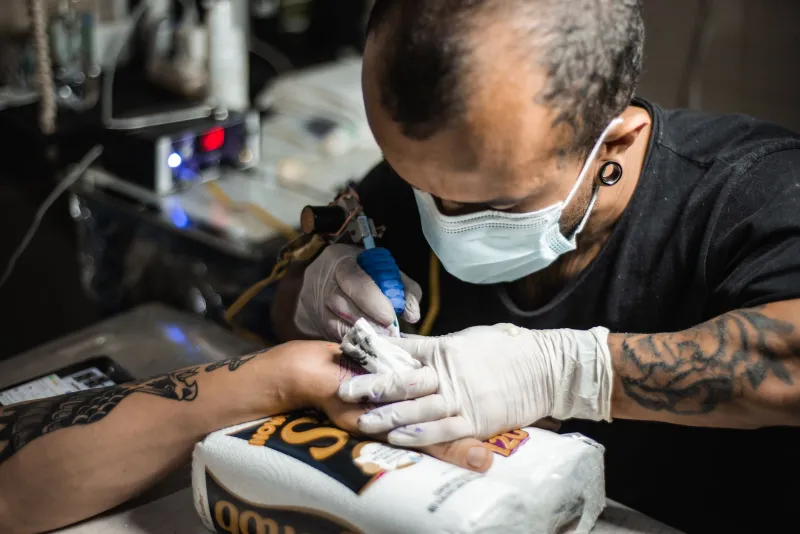
The tattoo industry has always had a mythology problem. The story it tells about itself — gritty, countercultural, anti-establishment — doesn't always match the reality of who gets to participate, who gets celebrated, and who gets shut out.
For Black and minority artists, that gap between mythology and reality has been a daily lived experience. The same industry that markets itself as a refuge from mainstream judgment has, in many corners, reproduced the exact same racial hierarchies it claims to reject. But something is shifting. Loudly, visibly, and permanently.
The History Nobody Talks About
To understand where things are now, you have to reckon with where they've been. American tattoo culture draws heavily from traditions that were never credited to their sources — Polynesian, Japanese, Indigenous, and West African art forms that were adopted, stripped of context, and commercialized by predominantly white-owned studios for decades.
That's not ancient history. It's a pattern that continued well into the 21st century and, in some spaces, hasn't stopped.
"The appropriation conversation makes some people uncomfortable, but it's not complicated," says Deja Monroe, a Black tattoo artist and studio owner based in Houston. "There's a difference between appreciation and extraction. When you're profiting from a cultural tradition and the people from that culture can't even get hired at your shop, that's a problem."
Monroe opened her own studio, Midnight Bloom Tattoo, after spending three years applying to apprenticeships across Texas and getting nowhere. She was qualified. She had a strong portfolio. The doors just kept not opening.
The Apprenticeship Pipeline Problem
In tattooing, the apprenticeship model is everything. It's how skills are passed down, how reputations are built, and — critically — how access is controlled. And for many BIPOC artists, it's been one of the most effective gatekeeping mechanisms in the industry.
Unlike licensed professions with standardized testing and clear entry criteria, tattoo apprenticeships are almost entirely at the discretion of established artists and shop owners. That discretion, intentionally or not, has historically favored candidates who look like, grew up around, or socially connected with the people already in power.
"It's a relationship business," explains Terrence Webb, a Chicago-based artist who now mentors young Black artists entering the field. "And when your social circles don't overlap with the people doing the gatekeeping, you're starting from zero. Worse than zero, actually, because you're also fighting assumptions."
Those assumptions — that Black artists specialize only in certain styles, that they're better suited for specific clientele, that their aesthetic sensibilities are somehow narrower — are a form of soft discrimination that's hard to document but impossible to miss when you're on the receiving end of it.
Owning the Narrative and the Real Estate
The response from many BIPOC artists hasn't been to beg for a seat at someone else's table. It's been to build their own.
Across the country, a wave of Black and minority-owned studios has opened in the last five years, creating not just businesses but community anchors. These spaces aren't just tattoo shops — they're intentional environments where clients of color feel seen, where BIPOC apprentices can actually learn their craft, and where cultural traditions are honored rather than extracted.
In Los Angeles, artist and activist Soleil Ramos runs Raíces Studio, a Latina-owned shop that has become a destination for clients seeking Chicano, pre-Columbian, and Mesoamerican-inspired work done by artists who actually understand the cultural weight behind it. "When someone comes in wanting a piece rooted in their heritage, they deserve an artist who gets it," Ramos says. "Not just technically, but spiritually. That connection matters."
In Atlanta, the emergence of Black-owned studios has been particularly notable, with several shops gaining national recognition not just for their inclusive environments but for the sheer quality of the work coming out of them. The talent was always there. The platform is finally catching up.
Social Media as the Great Equalizer
If the apprenticeship pipeline has been a barrier, Instagram and TikTok have been something of a workaround. BIPOC artists who might have spent years trying to break into established shops have instead built their own audiences, their own brand recognition, and their own waiting lists — entirely on their own terms.
"I didn't need a shop to co-sign me when I had 80,000 followers who could see my work every day," says Malik Greene, a Brooklyn-based artist known for his hyper-detailed Afrocentric portraiture. "Social media removed a layer of gatekeeping that would have taken me years to get through otherwise."
That visibility has also created accountability. When BIPOC artists share their experiences of discrimination, appropriation, or exclusion — whether in a TikTok video or a lengthy Instagram caption — the community responds. Studios have faced public pressure, artists have been called out for appropriative work, and conversations that used to happen in private have moved into the open.
What Real Change Looks Like
Calling out problems is necessary. But the artists driving this movement are equally focused on what comes next — the structural changes that would make the industry genuinely inclusive rather than just better at optics.
That means reforming how apprenticeships are sourced and structured, with more transparency and less reliance on personal networks. It means tattoo conventions actively recruiting and platforming BIPOC artists rather than treating diversity as an afterthought. It means trade publications and brand partnerships reflecting the full breadth of who's doing extraordinary work in this space.
It also means having honest conversations about compensation. BIPOC artists, particularly Black women, consistently report being undervalued for their labor — expected to charge less, do more, and be grateful for the exposure.
"Exposure doesn't pay rent," Monroe says flatly. "We're not asking for charity. We're asking for equity. There's a difference."
The Ink Is Already on the Wall
The tattoo industry is at an inflection point. The BIPOC artists leading this charge aren't waiting for the industry to catch up to them — they're moving forward regardless, building legacies that will outlast any individual shop or gatekeeping structure.
The culture is richer for it. The styles are more diverse, the conversations are more honest, and the studios being built right now are creating pipelines that will shape who tattoos America for the next generation.
At Tatted Tommy, we've always believed that tattoo culture belongs to everyone willing to live it authentically. That's not a radical idea. But making it a reality? That takes the kind of courage these artists show every single day they pick up a machine and refuse to be invisible.
Ink deep. Live loud. No regrets.