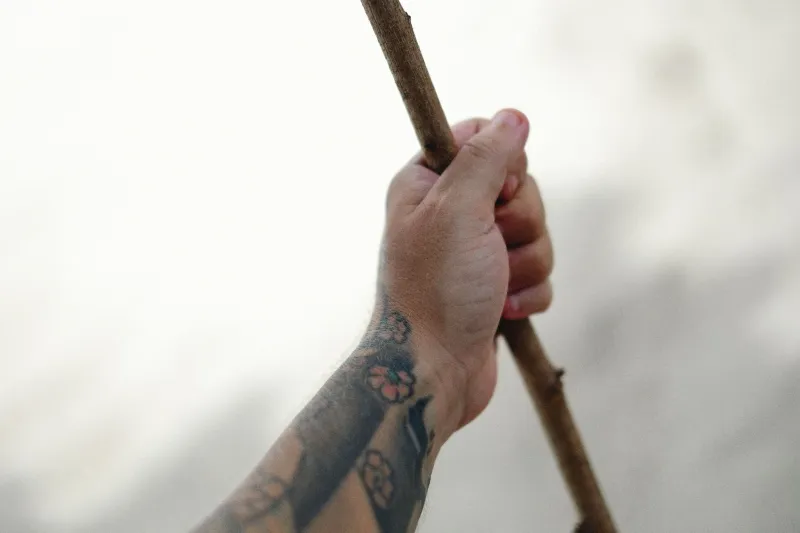
Poke, Press, and Pray: Inside the Wild Legal Gray Zone of America's DIY Tattoo Boom
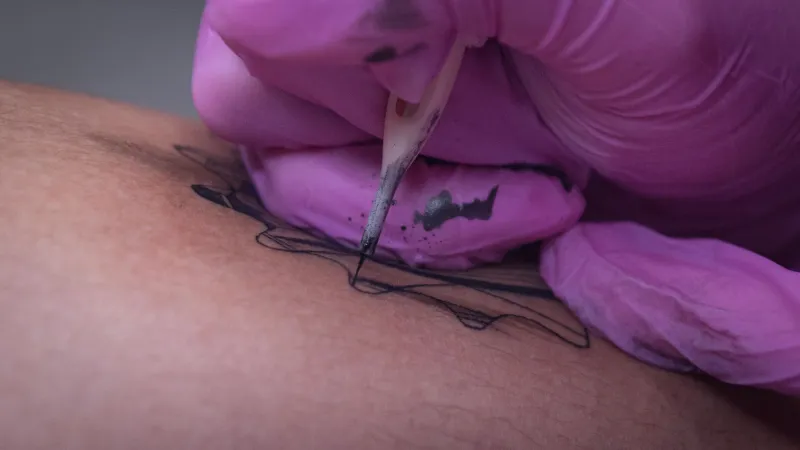
Somewhere in a Portland apartment, a 21-year-old is threading a sewing needle, wrapping it in thread, and dipping it into a small pot of india ink she ordered off Amazon. She's done this a dozen times—on herself, on her roommates, on friends of friends who slide into her DMs with reference photos. She doesn't have a license. She doesn't have a shop. She doesn't have liability insurance. And she's not alone.
The DIY tattoo scene has moved well past fringe territory. Stick-and-poke kits are pulling in millions of views on TikTok. Machine starter kits are available on Amazon for under sixty bucks. Instagram is flooded with home artists building legitimate followings—sometimes tens of thousands of followers—while operating entirely outside the regulatory framework that licensed shops are legally required to follow. It's raw, it's democratic, and depending on which state you're in, it might also land you with a criminal charge.
The Law Doesn't Move as Fast as a Trend
Here's the thing about tattoo regulation in America: it's a patchwork. There's no federal standard. Every state writes its own rules, and some of those rules were drafted decades ago when the idea of a teenager tattooing her friend's forearm with a kit she found on Etsy wasn't even a thought.
In most states, tattooing without a license is a misdemeanor. In others, it can escalate depending on circumstances—whether money exchanged hands, whether the person being tattooed was a minor, whether the work resulted in injury. California, New York, Texas, and Florida all have explicit licensing requirements for tattoo artists, and operating without one can result in fines ranging from a few hundred dollars to several thousand, plus potential criminal charges.
"The statutes were designed for brick-and-mortar shops," says one health code compliance officer in Colorado who asked not to be identified by name. "We didn't anticipate an entire underground economy operating through Instagram DMs. Enforcement is genuinely difficult because these artists don't have a storefront we can walk into."
That enforcement gap is exactly what's allowed the DIY scene to flourish. When your studio is your kitchen table and your advertising is a private story, you're essentially invisible to the inspectors who are busy auditing licensed shops.
The Health Risks Nobody Wants to Talk About
Let's be straight: the licensing requirements that frustrate so many aspiring artists exist for a reason. Licensed tattoo shops in the US are required to use single-use needles, maintain sterile environments, follow bloodborne pathogen protocols, and in most states, have artists complete training in preventing the transmission of diseases like hepatitis B, hepatitis C, and HIV.
DIY settings skip all of that. Not always out of carelessness—plenty of home artists are meticulous about their process—but because the infrastructure that enforces those standards simply doesn't apply to them.
The consequences can be severe. Infections from improperly sterilized equipment range from localized skin infections to systemic staph infections that require hospitalization. There have been documented cases of hepatitis C transmission linked to unlicensed tattooing. Allergic reactions to unregulated inks—some of which contain heavy metals or industrial-grade pigments not formulated for skin—can cause chronic inflammation, granulomas, and scarring that no licensed artist can fix.
"I've seen some genuinely beautiful work come out of the stick-and-poke community," says a dermatologist based in Chicago who treats tattoo-related complications. "I've also seen infections that could have been avoided entirely with basic sterile technique. The problem isn't the method. It's the lack of training."
Gen Z Knows the Risks. They're Going Anyway.
Here's where it gets complicated. Talk to the people actually participating in DIY tattoo culture and you'll find they're not ignorant of the risks. They've read the Reddit threads. They've watched the YouTube tutorials on sterilization. Many of them are more informed about bloodborne pathogen safety than the average person who stumbles into a flash sale at a discount shop.
What they're rejecting isn't safety—it's the gatekeeping.
"The apprenticeship system is broken for a lot of people," says Marcus, a 24-year-old self-taught stick-and-poke artist in Atlanta who's been tattooing friends and paying clients for three years. "I couldn't afford to work for free for two years under someone who may or may not actually teach me anything. So I taught myself, I practiced obsessively, and now I'm better than half the licensed artists in my city. The license doesn't make you good. It makes you legal."
That sentiment runs deep in a generation that came of age watching institutions fail them repeatedly. The tattoo licensing system, with its often arbitrary requirements, expensive coursework, and apprenticeship structures that can veer into exploitation, doesn't feel like consumer protection to many young artists. It feels like a velvet rope.
And then there's the aesthetic angle. Stick-and-poke tattoos have a look—intentionally imperfect, intimate, handmade—that machine work can't replicate. For a generation obsessed with authenticity and suspicious of anything too polished, that roughness is the whole point.
Regulators Are Finally Paying Attention
The DIY boom hasn't gone unnoticed by the people responsible for public health. Several states are actively reviewing their tattoo licensing statutes, partly in response to the explosion of home tattooing and partly because the existing frameworks genuinely haven't kept pace with how the industry has evolved.
Some public health advocates are pushing for a middle-ground approach: a simplified licensing pathway specifically for stick-and-poke artists that would require basic bloodborne pathogen certification and sterile equipment standards without demanding the full apprenticeship hours required for machine work. It's not a perfect solution, but it acknowledges that prohibition hasn't worked.
"We're not going to arrest our way out of this," the Colorado compliance officer admits. "The goal has to be harm reduction. If someone is going to tattoo their friends regardless of what the law says, we'd rather they know how to do it without spreading disease."
Licensed artists have mixed feelings. Some are furious, arguing that years of training and thousands of dollars in licensing fees put them at a competitive disadvantage against unlicensed artists who undercut their prices. Others are more philosophical, recognizing that the underground has always been part of tattoo culture's DNA.
The Bottom Line for Anyone Thinking About the Chair or the Needle
If you're considering getting tattooed by an unlicensed home artist, the risk calculation is real. Ask about their sterilization process. Ask where their needles come from and whether they're single-use. Ask about the ink. A legitimate home artist who takes their craft seriously won't be offended by those questions—they'll have answers ready.
If you're the one doing the tattooing, understand what you're walking into legally. In most states, taking money for tattoos without a license is a crime, full stop. The romanticized image of the garage artist building a following on vibes alone has a less glamorous footnote: one complaint, one health department tip, one client who has a bad reaction, and that following doesn't protect you.
The DIY tattoo scene isn't going anywhere. It's too embedded in youth culture, too tied to questions of access and authenticity, and frankly too profitable for the kit manufacturers to disappear quietly. But the legal and health infrastructure around it is starting to move, slowly and imperfectly, toward something that might actually account for the world as it exists.
Until then, it's poke, press, and pray—and hope the ink sets clean.