Shut Out and Cashing In: How Tattoo Discrimination Is Minting a New Wave of Self-Made Entrepreneurs

Let's be real for a second. If you're walking around with a full sleeve, a throat piece, or even just a visible forearm tattoo, you already know the drill. The callback that never comes. The interview where the hiring manager's eyes drift south of your collar one too many times. The polished rejection email that doesn't say what it actually means. Corporate America has a tattoo problem, and it's not getting fixed anytime soon — but here's the twist nobody in a boardroom is talking about: the people getting shut out are building something bigger than any cubicle could have held them.
Across the country, visibly tattooed Americans are being quietly pushed out of traditional employment pipelines — and a growing number of them are responding not with bitterness, but with business plans.
The Door That Keeps Closing
According to a 2023 survey by employment research firm Vault, nearly 37% of hiring managers admitted that visible tattoos negatively influenced their perception of a candidate's professionalism. That number climbs in industries like finance, law, healthcare administration, and corporate retail. It doesn't matter how sharp your resume is. It doesn't matter that your skills are undeniable. The moment those sleeves roll up, a lot of offices have already made up their mind.
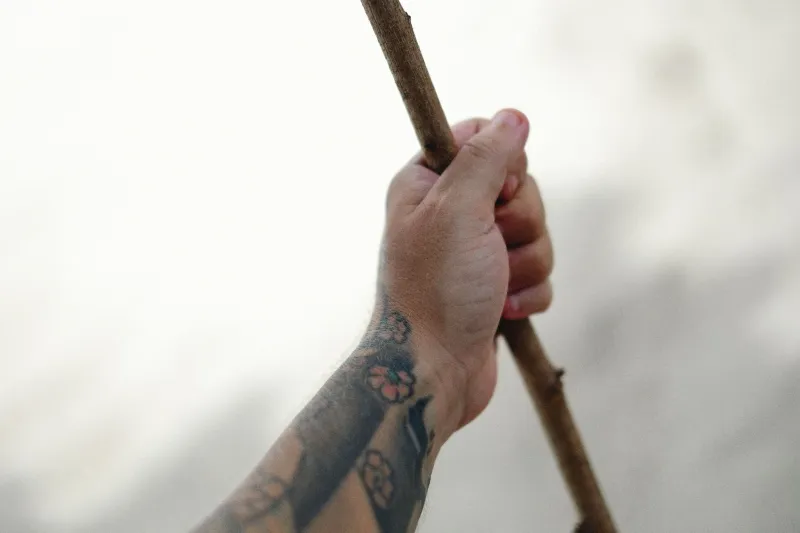
Marcus T., a 34-year-old graphic designer from Atlanta, knows this story cold. "I had a portfolio that was getting callbacks left and right — until I showed up in person," he says. "First interview, the creative director kept glancing at my hands. I've got knuckle work. Nothing offensive, just geometric stuff. I didn't get the job. Happened three more times before I stopped trying."
What Marcus did next is becoming something of a pattern. He launched a freelance design studio out of his apartment. Three years later, he employs two contractors and pulls in more annually than any of those companies were offering him.
"Rejection was the best business partner I ever had," he says, laughing.
Gig Economy or Ink Economy?
The gig economy gets talked about like it's some kind of economic accident — a byproduct of app culture and post-pandemic instability. But for tattooed workers, the freelance world isn't a fallback. It's often the only door that stays open.
Platforms like Fiverr, Upwork, Etsy, and Instagram have quietly become the great equalizers for people whose appearance disqualifies them from the traditional workforce. When your client never sees your face — or when your face and your ink are literally the brand — the old gatekeepers lose their grip.
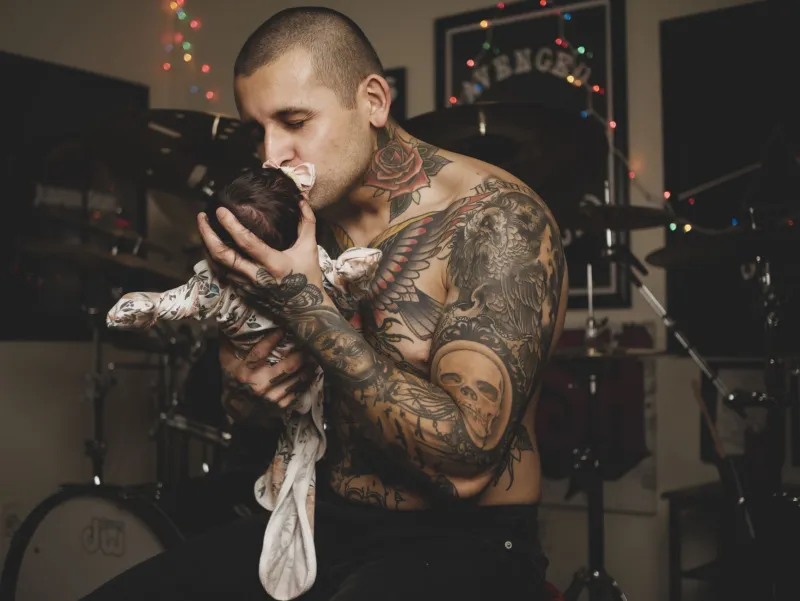
Jessica R., a 29-year-old esthetician and skincare content creator from Phoenix, put it plainly: "I have a full chest piece and both arms are done. Spas wouldn't hire me client-facing. So I built my own clientele on Instagram, launched a skincare line, and now I do pop-up events. I make my own hours. I answer to nobody." She paused. "I actually feel bad for the people who got hired instead of me. They're still clocking in."
This isn't just anecdotal. A 2022 report from the Freelancers Union noted that self-employed workers in creative and service industries skew significantly younger and more likely to identify as countercultural compared to traditionally employed peers. The tattoo community — by its very nature countercultural, independent, and aesthetically driven — fits that profile almost perfectly.
The Accidental Empire Builders
What's fascinating about this trend isn't just that tattooed people are going freelance. It's that many of them are thriving in ways that pure corporate-track ambition rarely produces.
Take Devon M., a 41-year-old from Chicago who spent his twenties getting passed over for management roles in the restaurant industry despite years of experience — he suspects his visible neck tattoo played a role, though no employer ever said it outright. He eventually opened his own food truck, then a second one, and is currently scouting a brick-and-mortar location. "The restaurant groups that wouldn't promote me are now asking me to cater their corporate events," he says. "I don't take those calls."
There's something almost poetic about it. The same institutions that treated visible ink as a liability are now, in some cases, coming back to the people they rejected — as customers, clients, and collaborators — because those people built something worth paying for.
Ink as Identity, Brand as Armor
Here's where it gets interesting from a cultural standpoint. For a lot of these entrepreneurs, their tattoos aren't just something they live with — they're core to their brand identity. The aesthetic that made them unemployable in a traditional setting becomes the thing that makes them magnetic in a marketplace that values authenticity.
Tattooed business owners report that their visible ink often builds trust with clients who are similarly counter-mainstream. It signals honesty, individuality, and a refusal to perform respectability for the sake of someone else's comfort. In a market saturated with polished, interchangeable personal brands, looking like yourself — all of yourself — is a competitive advantage.
"My tattoos tell people who I am before I say a word," says Jessica. "That filters out clients who wouldn't vibe with me anyway and draws in the ones who get it immediately. My conversion rate is insane because I'm not pretending."
The System Didn't Break Them — It Launched Them
None of this is to say tattoo discrimination is fine. It isn't. It's a form of appearance-based bias that disproportionately affects working-class and minority communities where tattoo culture has deep roots. People shouldn't have to become entrepreneurs to avoid being penalized for their appearance. That's a systemic failure, not a silver lining.
But there's something undeniably powerful happening in the margins of that failure. A generation of tattooed Americans — locked out of conventional career paths, ignored by HR departments, and underestimated by interviewers who couldn't see past their skin — is quietly building wealth on their own terms.
They're not waiting for corporate culture to catch up. They're not softening their look to fit someone else's idea of professional. They're building businesses that reflect exactly who they are, and they're winning.
Marcus put it best: "The company that wouldn't hire me because of my hands? I just turned down a contract from them. Felt pretty good to say no."
Ink deep. Live loud. No regrets — and apparently, no boss either.