Followers vs. Foundations: Who Really Gets to Call the Shots in Tattoo Culture Right Now
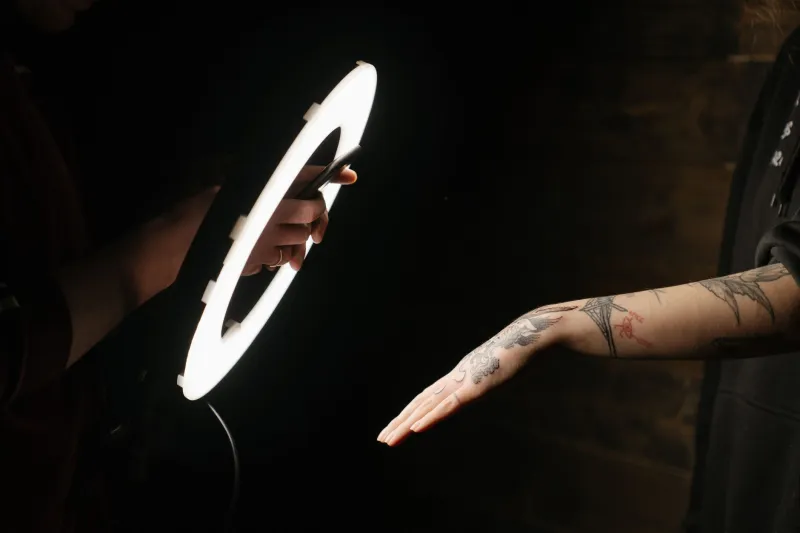
There's a war happening in tattoo shops across America, and it's not being fought with machines or ink. It's being fought with ring lights, comment sections, and follower counts. On one side, you've got artists who built their names the old way — years of sweeping floors, watching masters work, and earning their stripes one painful apprenticeship hour at a time. On the other, a new generation of creators who learned to tattoo and learned to perform simultaneously, racking up millions of views before their portfolios even hit their fifth year.
Both camps will tell you they love the craft. Both will tell you the other side is killing it.
So who's actually right?
The Rise of the Tattooed Content Creator
Let's be honest — social media didn't just change how tattoo artists market themselves. It fundamentally altered what success in this industry looks like. A decade ago, the most respected artist in your city was probably the one with a 14-month waitlist and a shop wall covered in photos of healed work. Today, that same level of cultural cachet might go to someone with 800,000 TikTok followers who posts satisfying time-lapses of geometric linework set to trending audio.
The influencer-artist hybrid is a real phenomenon now, and it's not going away. These are people who understand that attention is currency, and they've figured out how to mint it. They know their angles, they know their lighting, and they know exactly which style of tattoo photographs cleanest for a reel. Flash sets designed for virality. Micro tattoos that pop on a phone screen. Aesthetic-forward designs that look incredible in a grid and heal... well, sometimes less impressively.
Clients are showing up to shops with screenshots of their work. That's reach. That's power. And the traditional side of the industry is watching it happen with a mix of frustration and genuine alarm.
What the Old Guard Actually Fears
Here's the thing — when veteran artists push back against the influencer wave, they're not always just being territorial or nostalgic. Some of the criticism is legitimate craft concern.
Tattoos are permanent. They live on skin that ages, stretches, and scars. A design that looks stunning the day it's done but blows out within two years isn't a success story — it's a slow-burn problem the client carries for the rest of their life. And critics of the viral-first approach argue that optimizing for what photographs well in the short term doesn't always align with what holds up over decades of real-world wear.
The apprenticeship system, for all its flaws and gatekeeping reputation, was built around exactly this kind of long-game thinking. You didn't just learn to tattoo — you learned to think about skin as a living surface. You understood saturation, needle depth, placement relative to how a body moves. You watched healed work, not just fresh pieces. That knowledge base takes years to build, and it's hard to compress into a content calendar.
"There's stuff you only learn by watching a tattoo age," one Midwest-based artist with over two decades in the industry told us. "You can't learn that from a tutorial video. You can't learn it from 10,000 likes."
The Gatekeeping Problem Nobody Wants to Admit
But here's where it gets complicated. The traditional apprenticeship model has its own serious baggage, and pretending otherwise is intellectually dishonest.
For years — honestly, for generations — access to formal tattoo training was controlled by a relatively tight, often exclusionary network. Women, BIPOC artists, and anyone who didn't fit the cultural mold of a particular shop frequently found those doors closed to them regardless of their talent. The "earn your place" mentality, while rooted in real craft values, was also used as cover for some pretty ugly gatekeeping.
Social media blew that door off its hinges. Suddenly, an artist in rural Georgia or a first-generation American in a city without a single reputable shop willing to take them on could build an audience, develop a style, and attract clients entirely on the strength of their work. That's not nothing. That's actually a pretty significant democratization of an industry that badly needed it.
The influencer-era artist isn't always the problem. Sometimes they're the solution to a system that was protecting its own comfort more than its own standards.
What Clients Are Caught in the Middle Of
Meanwhile, regular people just trying to get tattooed are navigating a landscape that's more confusing than ever. How do you evaluate an artist's skill when follower count and actual technical ability have become so decoupled? A quick scroll through any major tattoo hashtag will show you accounts with massive audiences producing work that any seasoned artist would clock as technically weak — and smaller accounts doing genuinely masterful work that the algorithm just hasn't rewarded yet.
Client expectations have shifted in ways that cut both directions. On one hand, the viral era has made people more visually educated. Clients come in with real reference, specific styles in mind, and a genuine understanding of what they want. That's great. On the other hand, some clients are now chasing aesthetics they saw on a screen without understanding why that design worked for that specific body, skin tone, or placement — and they're disappointed when reality doesn't match the reel.
Shops are feeling this tension daily. Artists who've built their reputations on technical mastery are fielding consultations where clients are more interested in whether the artist has a big following than in looking at their healed work portfolio. That's a weird new world to navigate.
Can Both Versions of This Industry Actually Coexist?
Maybe the more honest question isn't who gets to define tattoo culture — it's whether this binary framing is even useful anymore.
The artists who are genuinely thriving in 2024 tend to be the ones who figured out how to hold both things at once. Deep technical skill and an understanding of how to communicate their work online. Respect for the craft's history and a willingness to engage with where the culture is actually moving. You don't have to choose between being a serious artist and being visible. The ones insisting you do are often protecting something other than standards.
What does need to happen — and what the industry's better voices are pushing for — is more honesty about what separates good work from content-optimized work. More transparency with clients about what healed tattoos actually look like. More pathways into the trade that don't require knowing the right person or fitting a particular mold.
The needle purists have something real to protect. The ink influencers opened doors that needed opening. The question is whether either side is willing to learn anything from the other.
Because at the end of the day, the tattoo on your skin doesn't care how many views the artist's last video got. It just has to hold up for the rest of your life.