Ink in the C-Suite: How Tattooed Executives Are Rewriting the Rules of Corporate Power
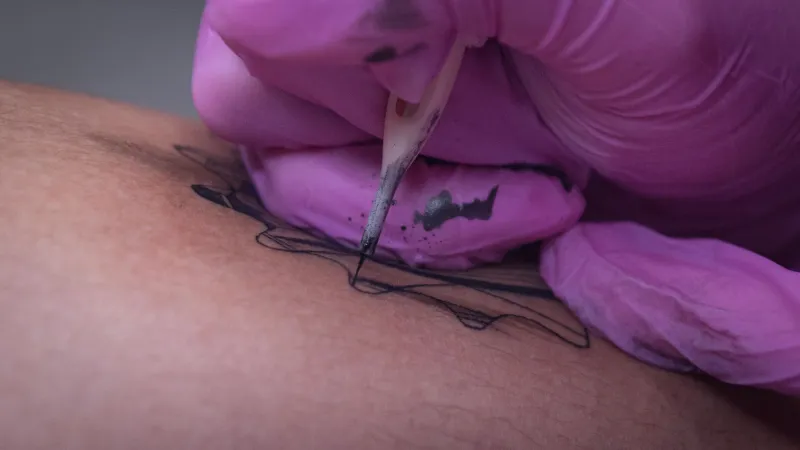
For decades, the unwritten dress code of corporate America was pretty straightforward: pressed suit, firm handshake, zero visible tattoos. If you had ink, you covered it. Long sleeves in July. Foundation over your forearm. A carefully curated performance of "professionalism" that had nothing to do with your actual competence and everything to do with other people's comfort.
That playbook is getting shredded — one boardroom at a time.
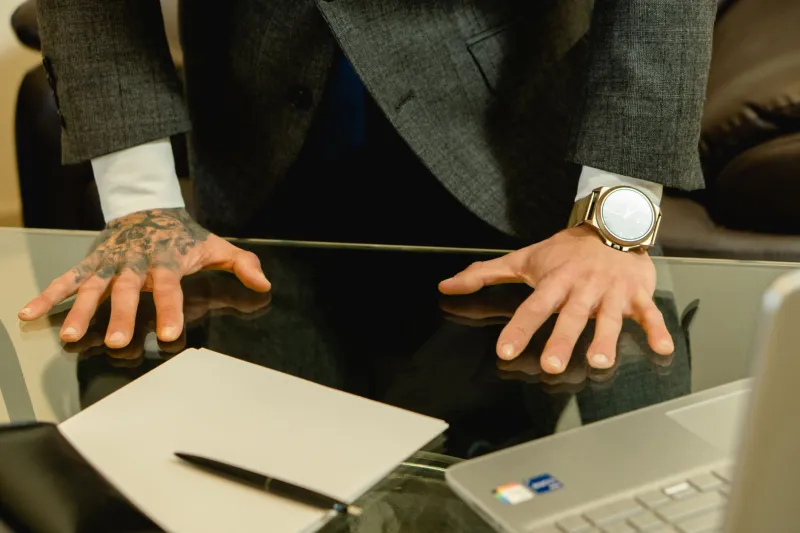
Across industries from tech to finance to law, tattooed executives are stepping into high-stakes roles without hiding a single drop of ink. Full sleeves peeking out from rolled-up dress shirts. Neck pieces visible above open collars. Knuckle tattoos resting on mahogany conference tables. And increasingly, nobody's making it weird.
The Shift Nobody Officially Announced
There wasn't a memo. No Fortune 500 company held a press conference to declare that tattoos were officially welcome in leadership positions. The change has been quieter than that — and maybe more meaningful because of it.
A lot of it traces back to the broader workforce evolution that accelerated after 2020. Remote work dismantled some of the performative formality that offices had enforced for generations. When your CEO is running a Zoom call from their home office in a hoodie, the argument for rigid appearance standards starts looking pretty thin. Visibility into people's actual lives — their bookshelves, their kids, their real selves — made the sanitized corporate persona harder to maintain.
And then there's the generational math. Millennials are now firmly embedded in mid-to-senior management. Gen Z is climbing fast. These are the most tattooed generations in American history. According to a 2023 Ipsos survey, nearly half of Americans under 40 have at least one tattoo. When the talent pool is that saturated with ink, companies that screen out tattooed candidates are quietly cutting themselves off from a massive slice of skilled professionals.
Real People, Real Power, Real Ink
The tattooed executive isn't a niche anymore. Talk to enough people in corporate spaces and you'll find them everywhere — often in roles you'd least expect.
Take the legal world, historically one of the most buttoned-up professions in existence. Partners at major firms are now walking into depositions with sleeve work visible. Trial attorneys are appearing before juries with ink on their hands. And here's the thing — clients aren't walking out. Juries aren't tuning out. Because at the end of the day, what people care about is whether you know your stuff and whether you're going to fight for them.
In the tech sector, visible tattoos have been normalized for years at the individual contributor level. What's newer is seeing that same energy in the executive suite. CTOs with half-sleeves presenting to boards of directors. VPs of engineering with chest pieces that peek above their collar during all-hands meetings. The culture that built Silicon Valley was always a little rebellious — it just took a while for the rebellion to reach the corner office.
Financial services is arguably the most interesting frontier. Banking and investment have clung hardest to the conservative appearance standard, and yet even there, cracks are forming. Wealth managers with visible forearm tattoos are landing high-net-worth clients who specifically vibe with someone who doesn't look like every other advisor they've ever met. Differentiation in a sea of sameness has actual business value.
The Stigma That Won't Fully Die
Let's not get too comfortable here, though. Saying tattoos are "becoming accepted" in corporate America and saying the stigma is gone are two very different things.
The reality is messier. Plenty of tattooed professionals still report being passed over for promotions, steered away from client-facing roles, or subjected to subtle commentary that makes it clear their ink is being noted — even if nobody says it directly. Corporate politeness is its own kind of pressure. Nobody's going to tell you to your face that your sleeve cost you the VP title. They'll just give it to someone else and smile at you in the hallway.
Industry matters enormously. A full sleeve might raise zero eyebrows at a creative agency in Brooklyn or a tech startup in Austin, while that same tattoo could still be a quiet liability at a traditional financial institution in Charlotte or a law firm in Dallas. Geography matters too. The coasts have generally moved faster on this than the middle of the country, though that gap is narrowing.
And there's an intersectional layer here that's worth naming. White executives with tattoos tend to navigate these spaces with more ease than tattooed professionals of color, who often face a compounded scrutiny — their appearance evaluated through multiple lenses of bias simultaneously. The "tattooed executive" narrative can't be told honestly without acknowledging that the experience isn't uniform.
What the Tattooed Leader Actually Represents
Here's what's genuinely interesting about this shift, beyond the surface-level optics of ink in a boardroom: tattooed executives often bring a specific kind of authenticity that resonates in a business environment that's been burned by too much polish and not enough realness.
There's something about choosing permanent, visible body art — especially in a world where it could cost you professionally — that signals a certain kind of self-assurance. You're not performing for the room. You're not shapeshifting to fit someone else's idea of what leadership looks like. That's a quality organizations increasingly say they want, even if they haven't always been willing to accept it when it shows up with a sleeve.
Leaders who are visibly tattooed also tend to create more psychologically safe environments for their teams. When the person at the top of the org chart is authentically themselves — ink and all — it sends a signal that you don't have to hide who you are to succeed here. That's not a soft, feel-good outcome. That's a retention and culture advantage with real business impact.
The Boardroom Isn't Done Changing
We're somewhere in the middle of this story, not at the end. The tattooed executive is real, increasingly visible, and genuinely influential — but corporate America hasn't fully shed its old skin yet. The progress is real. So is the resistance.
What seems clear is that the direction of travel isn't reversing. Every tattooed professional who lands a C-suite role, closes a major deal, or wins a high-profile case makes it a little harder for the next organization to pretend that ink disqualifies someone from a seat at the table.
The boardroom is getting tattooed. Slowly, imperfectly, and with some institutional reluctance still in the mix — but it's happening. And if you ask us at Tatted Tommy, it's about time the people making the big decisions started looking a little more like the rest of us.
Ink deep. Live loud. No regrets — not even in a corner office.