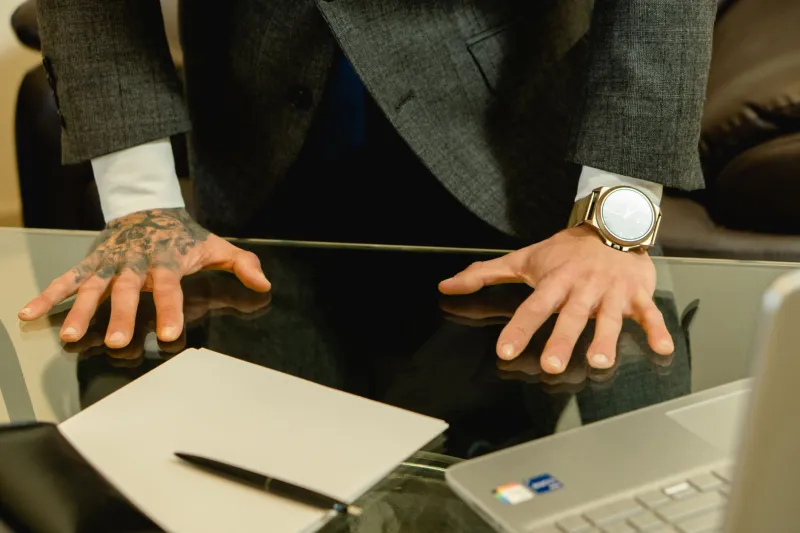
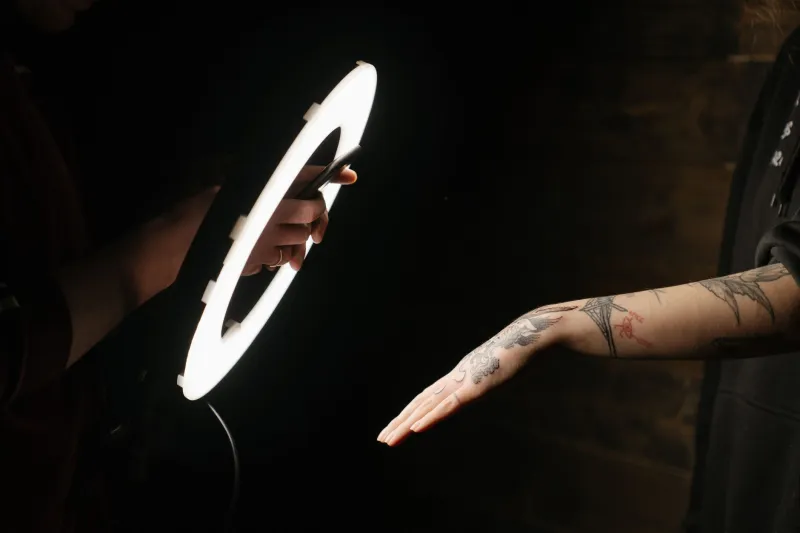
Old Money, New Ink: How America's Elite Families Are Turning Tattoos Into Heirlooms
There's a particular kind of wealth that doesn't announce itself on Instagram. It sits in wood-paneled studies, moves quietly through private equity, and passes itself down through generations the way a good last name does — deliberately, with intention, and with the full understanding that some things are meant to last forever.
Now, a growing number of those families are adding something new to that inheritance: ink.
It sounds counterintuitive. Tattoos have spent the better part of two centuries being the language of the outsider — sailors, bikers, convicts, punk kids with nothing to lose. But somewhere along the way, the permanent mark stopped being a symbol of what you rejected and started becoming a symbol of what you claimed. And for a certain tier of American wealth, what they're claiming is legacy.
When the Commission Isn't a Painting
Luxury tattoo artists — yes, that's a real and thriving category now — are reporting a surge in inquiries from high-net-worth clients who aren't just looking for a single statement piece. They're coming in with family members. Sometimes multiple generations at once. They arrive with reference materials: coat of arms sketches, heirloom jewelry photographs, handwritten letters from deceased grandparents, architectural blueprints of family estates.
They want something that ties all of it together. Something that can be worn by a 70-year-old patriarch and his 25-year-old granddaughter without looking like a costume on either of them.
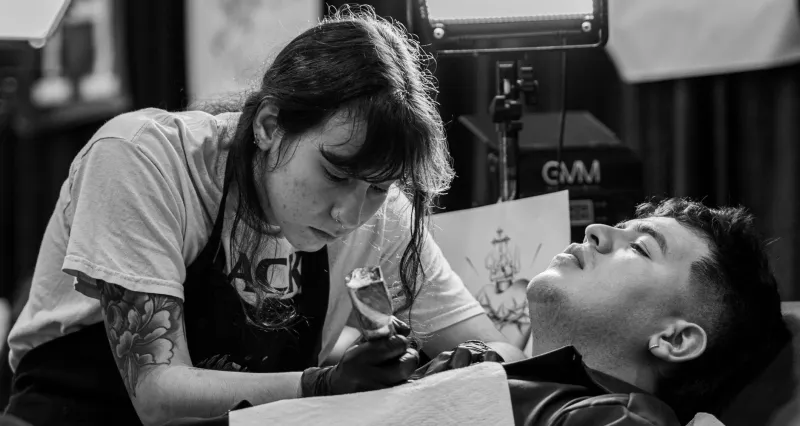
Artists who operate in this space describe the process as closer to working with a fine art curator than a traditional tattoo client. Consultations can run weeks. Revisions happen on paper before they ever happen on skin. Pricing, when artists are willing to discuss it at all, can run anywhere from $5,000 to well north of $50,000 for a full family commission — and that's before you factor in travel, accommodations, and the kind of discretion that doesn't come cheap.
"These clients aren't walking in off the street," one New York-based artist who works almost exclusively in private commissions told us. "They're referred by other clients. They've already done their research. They know exactly who they want and why. The conversation isn't about whether to do this — it's about how to do it in a way that actually means something a hundred years from now."
Dynasty in the Details
What makes these pieces different from a matching tattoo you and your college roommate got in Cancun isn't just the price tag. It's the architecture of the idea.
Families commissioning legacy ink typically approach it the way they'd approach commissioning a family portrait — with a clear narrative, a defined visual language, and an eye toward how the piece will read not just today but across time. Some opt for a single unified design that each family member gets in the same placement. Others commission a series of connected images, like chapters in a book, where each person's tattoo is complete on its own but tells a larger story when the family is together.
Common themes include botanical imagery tied to family estates or geographic origins, astronomical elements referencing birth years or meaningful dates, reinterpreted heraldic symbols, and abstracted versions of signatures from significant ancestors. The work tends to skew toward fine line, illustrative, or neo-classical styles — aesthetics that photograph like engravings and age with a kind of dignity that tribal flash from a strip mall does not.
The symbolism is rarely accidental. One artist described a commission for a Southern family in which a magnolia — planted by a great-great-grandmother on the family's original property — became the central image for a set of matching pieces worn by four generations of women. "That tree is still standing," the artist said. "The tattoo is the tree. It's not a metaphor — it's documentation."
The Shift From Rebellion to Ritual
For anyone who came up in tattoo culture during its more countercultural years, this development carries a certain irony. The same imagery that once marked you as outside the establishment is now being used by the establishment to mark itself. The subversive has become the ceremonial.
But maybe that's less of a contradiction than it seems. Tattoos have always been about belonging. The difference is just who's doing the belonging.
Anthrologists who study body modification have long noted that permanent marking is one of the oldest forms of group identity across virtually every human culture on earth. Warriors, priests, royalty — the idea that ink signals status is not new. What's new is that American wealth culture, which spent decades treating tattoos as a liability, has finally caught up to what the rest of the world's elite has understood for centuries: that a mark you can't sell, can't lose, and can't have taken from you is a particular kind of power.
"These families aren't doing this because tattoos are trendy," said one cultural commentator who covers luxury lifestyle trends. "They're doing it because they've figured out that permanence is the ultimate luxury. Everything else can be inherited or lost. This can only be chosen."
Not Without Complications
Of course, not every family member shows up to the consultation equally enthusiastic. Artists who work in this space are candid about the dynamics they sometimes walk into — the adult child who feels pressured, the spouse who wasn't consulted, the sibling who quietly opted out and is now navigating what that absence means at family gatherings.
The commitment required is real, and the stakes of a mismatch are higher when the piece is meant to represent something larger than one person's aesthetic preferences. Unlike a painting you can move to storage or a piece of jewelry you can leave in a drawer, a legacy tattoo is always present. It asks something of you every time you look in the mirror.
The artists who do this work well understand that they're not just tattooers. They're mediators, historians, and sometimes therapists. Getting the piece right means getting the family right first.
Ink as the New Heirloom
What's undeniable is that something is shifting in how Americans — at least some Americans — think about what gets passed down and what that passing down means. A tattoo can't be contested in a will. It can't be pawned or disputed or divided among heirs. It can only be chosen, worn, and carried forward.
In a culture that has spent the last decade reckoning with what legacy actually means — who builds it, who benefits from it, who gets written out — there's something quietly radical about a wealthy family choosing a medium that was never meant for them and making it mean something anyway.
Or maybe it's just the oldest story in the book: people with power deciding what counts as art, what counts as permanence, and what counts as worth keeping.
Either way, the ink is in. And it's not going anywhere.