Same Skin, Different Generation: The Parents and Adult Kids Getting Inked Together
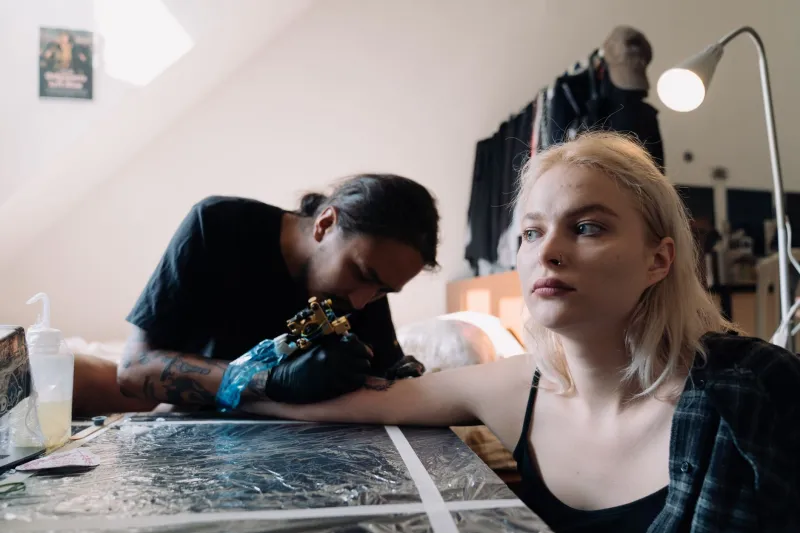
There's a moment in a lot of tattoo studios that used to feel a little awkward — when a nervous 18-year-old slides into the chair and their parent hovers nearby, somewhere between horrified and trying to be cool about it. That dynamic is shifting in a big way. These days, more and more artists across the country are reporting something they didn't exactly see coming: mom and daughter booking back-to-back appointments. Dad and son rolling up together with a reference image they both agreed on. Grandma, even, sitting for her very first piece alongside a kid who's already half-sleeved out.
Matching family tattoos aren't new, exactly. But the version of it happening right now — between parents and their adult children, planned and deliberate and deeply personal — feels like something different altogether.
The Old Script Got Flipped
For decades, tattoos were one of the clearest cultural markers of generational divide. You got inked partly because it bothered your parents. It was a declaration of independence written in permanent ink. The gap between the generation that associated tattoos with bikers and the Navy and the generation that saw them as wearable art was wide enough to park a truck in.
That gap has been closing for years, but what's happening now goes beyond tolerance. According to a 2023 Ipsos poll, nearly one in three American adults has at least one tattoo. Among adults over 40, that number has climbed steadily for the past decade. Tattoos are no longer the exclusive territory of the young and the restless. They belong to everyone now — and families are figuring that out in real time.
Kristen M., a 52-year-old nurse from Nashville, got her first tattoo at 49. Her daughter had been tattooed since college, and after years of admiring the art, Kristen finally decided she wanted in. "We went together for mine, and something just clicked," she told us. "Six months later, we went back and got matching wildflowers — hers on her shoulder, mine on my wrist. It sounds cheesy, but it felt like we were finally speaking the same language."
What's Actually Driving This
Psychologists who study family bonding and identity formation have a few theories about why this trend is picking up steam right now. One of the most compelling is the idea of ritual reconnection — the need for families to create new ceremonies as traditional ones fade or lose meaning.
Dr. Amara Jones, a family therapist based in Atlanta who works with adult children and their parents, explains it this way: "We've lost a lot of the communal rituals that used to mark transitions — religious ceremonies, community milestones. Families are creating their own. A tattoo is permanent, it's visible, and it requires a shared decision. That's a pretty powerful combination."
There's also something to be said about the specific weight of doing something irreversible together. Grabbing coffee or taking a vacation is low stakes. Choosing a piece of art that will live on your body forever? That's a whole different level of commitment to a shared moment.
For Marcus T., a 58-year-old contractor from Phoenix, getting inked with his 26-year-old son Deon was about marking a specific chapter. "We went through some rough years when he was a teenager," Marcus said, not sugarcoating it. "Getting through that and coming out on the other side — we wanted something that said 'we made it.' Words weren't enough. Deon drew the design himself. It's a compass. We've got the same one now."
The Artists Weigh In
Tattooed Tommy reached out to a handful of artists across the country to get their read on this trend, and the response was pretty unanimous: it's real, it's growing, and it hits different every time.
"I've been tattooing for fifteen years and the family appointments have genuinely increased," said Lena Voss, who runs a studio in Portland, Oregon. "What I notice is how much thought they put into it. These aren't impulse decisions. Families come in with stories, with meaning, with a clear idea of what they want this to represent. It's some of the most emotionally charged work I do."
The designs themselves tell a story about what families value. Matching birth flowers. Coordinating pieces that only make sense when you're standing next to each other. Quotes split across two forearms. Animals that hold family significance. The symbolism is intentional in a way that a lot of solo ink isn't — because two people had to agree on it.
Not Everyone's Ready to Call It a Hallmark Moment
Let's be real — not everybody is here for the wholesomeness of it all. There's a contingent in tattoo culture that side-eyes anything that feels too curated, too Pinterest-board, too divorced from the raw history of the art form. And that's a fair conversation to have.
Tattoos have roots in resistance, in identity forged outside the mainstream. When they get packaged as a family bonding activity, some people feel like something gets lost. The edge softens. The rebellion gets domesticated.
But here's the counterargument: tattoo culture has always evolved. It absorbed fine art, it absorbed street culture, it absorbed feminist reclamation and queer identity and survivorship. The idea that family connection somehow dilutes the form doesn't really hold up historically. If anything, the fact that a 55-year-old mom is willing to sit in a chair and wear something permanent for the rest of her life says something pretty serious about how much this art form has earned its place.
A New Kind of Family Portrait
What strikes us most about this trend isn't the matching designs or the tearful studio moments (though those are genuinely moving). It's what the whole thing says about where tattoo culture has landed in America.
We're at a point where ink isn't just for the young, the wild, or the counter-cultural. It's a language that families are learning to speak together — across age gaps, across old misunderstandings, across the complicated terrain of parents and children figuring out how to be adults in each other's lives.
That compass Marcus and Deon share? It's not just a design. It's proof that they found their way back to each other. And it's on their skin forever.
If that's not what tattoo culture is capable of at its best, we don't know what is.