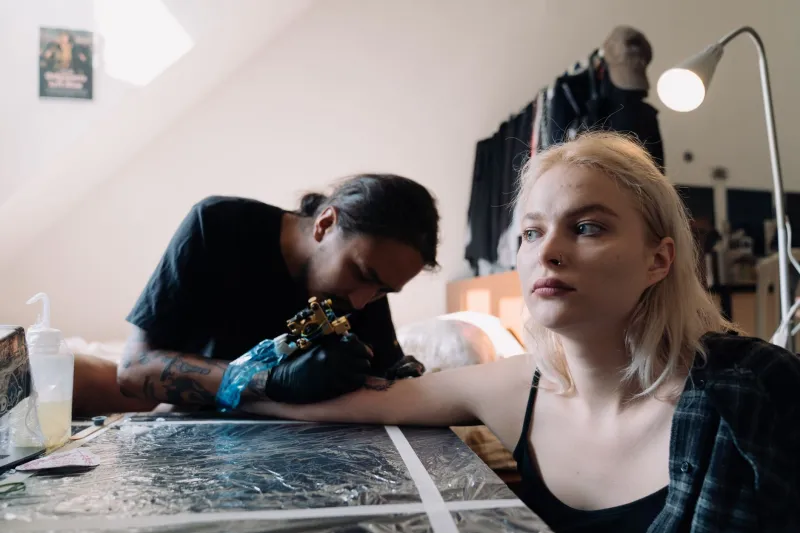
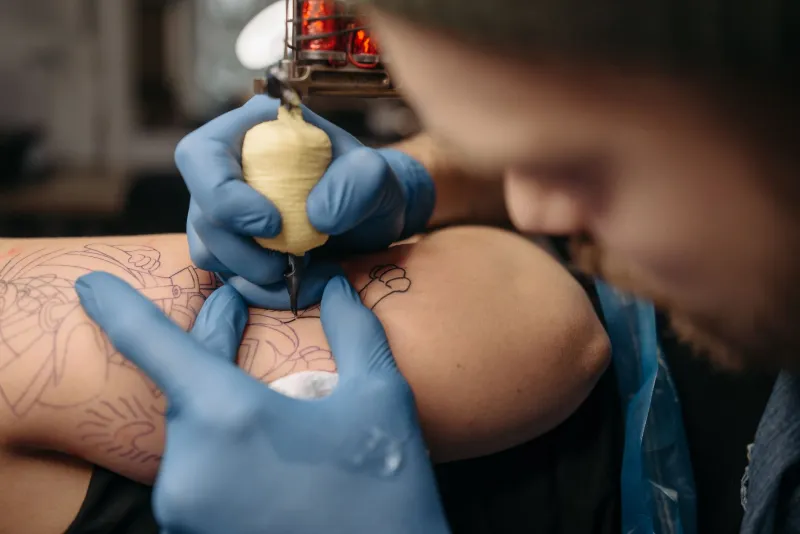
Marked by Defiance: How Americans Are Using Ink to Fight Back Against the System
There's something about a tattoo that a protest sign can never quite replicate. You can put down a sign. You can delete a tweet. You can change your profile picture when the news cycle moves on. But the ink in your skin? That stays. And for a growing number of Americans, that permanence isn't a liability — it's the whole point.
Across the country, people are sitting in tattoo chairs not just to commemorate something beautiful or personal, but to make a statement that power structures can't ignore, silence, or scroll past. Political and social rebellion through body art isn't a new phenomenon — not by a long shot — but the urgency, the visibility, and the sheer volume of it in modern America has reached a pitch that demands attention.
The Body as a Battlefield
To understand why tattooing and resistance are so deeply intertwined, you have to zoom out a little. Historically, the people most likely to get tattooed in America were the people most likely to exist on society's margins — sailors, prisoners, circus performers, gang members, immigrants, Indigenous communities. These weren't groups with a lot of institutional power. What they had was their bodies. And what they did with those bodies was assert ownership, identity, and belonging in a world that often tried to deny them all three.
That lineage runs directly into the present. When marginalized communities, activists, and survivors choose to mark their bodies with symbols of resistance, they're participating in a tradition that stretches back centuries. They're saying: this body belongs to me, and I decide what it means.
"Tattooing has always been an act of defiance for people who weren't given much else to work with," says cultural historian and tattoo scholar Dr. Leona Vasquez. "The establishment has always been uncomfortable with tattooed bodies because they represent a refusal to conform, to disappear, to be easily categorized and controlled."
The Language of the Marked
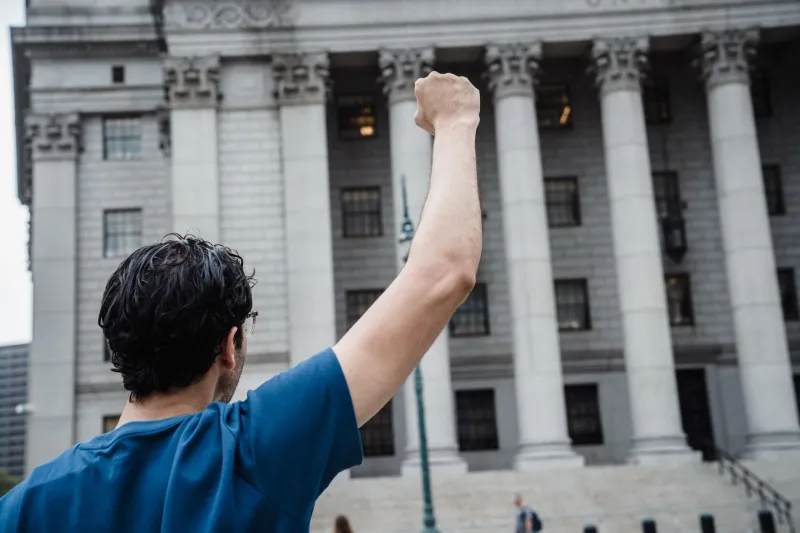
Walk through any protest in America over the last decade and you'll see it — the raised fist, the scales of justice, the snake with the "Don't Tread on Me" coil, the trans flag colors woven into a sleeve, the names of people killed by police rendered in careful script on forearms and ribcages and collarbones. These aren't just decorations. They're declarations.
After the murder of George Floyd in 2020 and the subsequent global uprising, tattoo shops across the country reported surges in requests for memorial pieces, Black Power imagery, and protest-inspired designs. Artists who specialize in Afrocentric work saw waitlists stretch out for months. People wanted to carry the moment on their skin because they didn't trust that the world would remember it on its own.
DeAndre Williams, a 28-year-old from Minneapolis, got the words "I Can't Breathe" tattooed across his ribs in the summer of 2020. He's never regretted it for a single day.
"It's not just about George Floyd, though he's part of it," DeAndre explained. "It's about every person before him. It's about my own experiences. It's a reminder that this fight didn't start with me and it won't end with me. Every time I take off my shirt, I'm reminded of what I'm fighting for."
Reclaiming the Body, Reclaiming the Story
For survivors of trauma — sexual assault, domestic violence, hate crimes — political tattoos often serve a dual function: they're both personal healing and public statement. The body that was violated, controlled, or targeted becomes a canvas for reclamation.
The #MeToo movement gave rise to a wave of survivor tattoos, many featuring phoenixes, broken chains, or simple words like "survivor" and "mine." Trans and nonbinary individuals have long used tattoos to affirm gender identity and resist the erasure and medicalization of their bodies. Indigenous Americans have increasingly reclaimed traditional tattooing practices — some of which were actively suppressed during colonization — as a form of cultural sovereignty and decolonization.
"When you have a history of people trying to control your body, marking it on your own terms is a radical act," says tattoo artist and activist Sasha Redcloud, a citizen of the Lakota Nation who practices traditional hand-poke tattooing in Rapid City, South Dakota. "It's saying: I decide what this body carries. I decide what story it tells."
Why the Establishment Still Flinches
If political tattoos were just a niche subculture thing, the people in power wouldn't care. But they do care — and that reaction is telling.
Visibly tattooed activists are still profiled, still treated with additional suspicion by law enforcement, still dismissed in courtrooms and boardrooms and political arenas. The tattoo, particularly on certain bodies, continues to function as a marker of "otherness" in the eyes of institutions built to maintain a very specific kind of order. And that's precisely why it retains its power as a symbol of resistance.
When Congresswoman Alexandria Ocasio-Cortez wore a dress with "Tax the Rich" written on the back to the Met Gala, the conversation that erupted was about whether the message was appropriate for the venue. Nobody talks about the permanence of a tattoo that says the same thing — but the discomfort it generates in certain circles is identical. The message on the body is harder to dismiss than the message on the dress because it can't be taken off. It's not a costume. It's a commitment.
Ink in the Age of Algorithmic Erasure
There's something else worth noting in the digital age: social media platforms regularly suppress, censor, or shadow-ban content related to protest, activism, and marginalized communities. Accounts get flagged. Posts get removed. Hashtags get buried.
You can't algorithm a tattoo.
In a media landscape where visibility is increasingly controlled by corporate platforms with their own political pressures, the human body remains one of the last truly ungovernable broadcast channels. A tattoo walks into every room its wearer enters. It doesn't need a platform or a signal. It can't be taken down with a terms-of-service violation.
"There's a reason people say 'wear your heart on your sleeve,'" says Marcus, a tattoo artist and community organizer in Philadelphia who has given deeply discounted or free tattoos to activists and protesters. "When the sleeve is literally your skin, that expression takes on a whole different weight. You're not just expressing something — you're being it."
Not Everyone Agrees, and That's the Point
It would be disingenuous to pretend that political tattoos exist without controversy — even within tattoo culture itself. Some artists are reluctant to do overtly political work, either because they don't want to wade into divisive territory or because they worry about the longevity of a tattoo tied to a specific political moment. Some wearers later complicate or evolve their relationship with the imagery on their skin as their own beliefs shift.
And the political spectrum of tattoo-as-resistance isn't monolithic. Conservative and libertarian Americans tattoo the Second Amendment, the Gadsden flag, and military tributes with the same sense of identity and defiance. The rebel spirit of ink doesn't belong to any single ideology — it belongs to the impulse to say this is who I am and I won't apologize for it.
That's the thing about permanent defiance. It's honest. It doesn't hedge. And in a culture that often rewards performance over conviction, there's something genuinely radical about putting your beliefs somewhere they can't be taken back.
The skin remembers. And so does the fight.