Still Judged by Your Skin: The Corporate World's Tattoo Problem Isn't Going Away

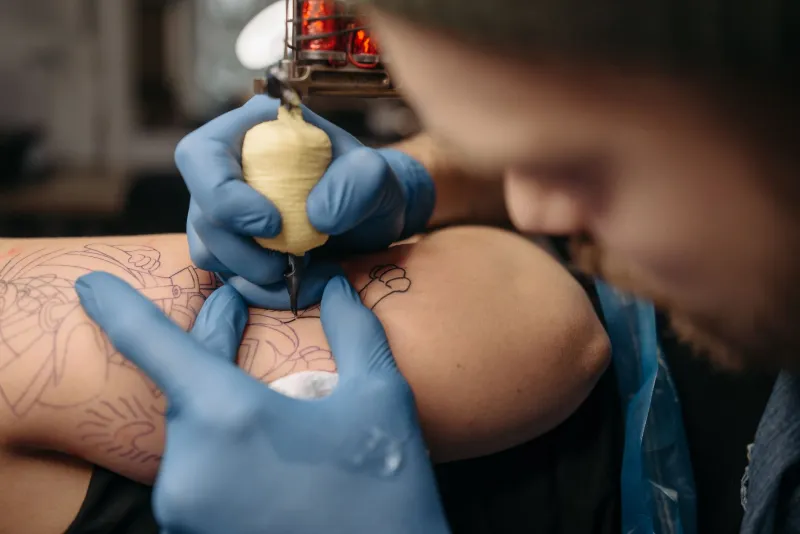
About one in three American adults has at least one tattoo. That number keeps climbing. Tattoo culture has pushed its way into music, fashion, sports, and mainstream media with no signs of slowing down. And yet, walk into the wrong job interview with a neck piece or a full sleeve, and you might as well have shown up without pants.
The disconnect between how tattoos are perceived in everyday American life and how they're treated in professional settings is jarring — and for a lot of people, it's not just frustrating. It's costing them real money, real opportunities, and real career advancement.
The Stories Nobody Wants to Officially Tell
Here's the thing about workplace tattoo discrimination: it's almost never documented. Nobody sends you a rejection email that says we loved your resume but your forearm piece was a dealbreaker. It happens in the quiet, in the gut-feeling hiring decisions, in the "culture fit" conversations that leave no paper trail.
But talk to tattooed professionals, and the stories pour out.
A marketing manager in Chicago — twelve years of experience, an MBA, and a half-sleeve she keeps covered in interviews — describes the mental calculation she does every single morning: long sleeves or short sleeves today? "I know my work speaks for itself," she says. "But I also know I've walked into rooms and watched people's faces change when they see my arm. You learn to manage it."
A software developer in Austin with hand tattoos says he was explicitly told during a debrief call — after making it to the final round of interviews at a financial tech firm — that leadership had "concerns about client-facing optics." He'd never even been proposed for a client-facing role.
A nurse in Atlanta with neck tattoos covered by her scrubs describes being moved off a patient unit when a hospital administrator found out about her ink during a non-clinical event. No formal complaint. No HR process. Just a quiet reassignment.
These aren't fringe cases. They're Tuesday.
The Legal Reality Is Bleak
Here's the uncomfortable truth: in most situations, discriminating against someone for their tattoos is completely legal in the United States.
Federal anti-discrimination law — think Title VII of the Civil Rights Act — protects workers from bias based on race, color, religion, sex, and national origin. Tattoos aren't on that list. State laws vary, but very few jurisdictions have moved to extend explicit protections to body art.
The one narrow exception involves religious tattoos. If an employee's tattoos are tied to a sincerely held religious belief, an employer may be required to make reasonable accommodations under Title VII's religion provisions. But that's a difficult standard to meet and rarely litigated successfully.
For everyone else, employers have broad latitude to set appearance standards — including policies that require covering or prohibit visible tattoos entirely. Courts have consistently upheld these policies as legitimate business decisions, particularly when the employer can point to client relations or brand image as justification.
Employment attorneys will tell you the same thing: unless you can tie the discrimination to a protected class, your options are limited. You can leave. You can comply. Or you can fight a battle that the law, currently, isn't set up for you to win.
The Generational Fault Line
Workplace attitudes toward tattoos aren't monolithic — they're deeply generational, and that generational divide is playing out in real time across American offices and hiring rooms.
Baby Boomers and older Gen X managers who hold a disproportionate share of senior leadership positions came of age in an era when tattoos were strongly associated with specific subcultures: bikers, prisoners, sailors, counterculture rebels. That association — however outdated — doesn't evaporate overnight, and it shapes hiring and promotion decisions in ways that even well-meaning leaders may not fully recognize.
Millennials and Gen Z, on the other hand, grew up in a world where tattoos are genuinely mainstream. For younger workers, body art is a form of self-expression no more remarkable than a haircut or a piercing. The cultural gap between these two groups is significant, and as workforce demographics continue to shift, the pressure on outdated appearance policies is only going to increase.
Organizational psychologists who study workplace culture point to something called affinity bias — the tendency to favor people who look, think, and present themselves similarly to the decision-maker. In a hiring context, that bias can easily manifest as discomfort with visible tattoos, particularly in industries where the leadership skews older and more conservative.
The Companies Actually Getting It Right
Not every employer is stuck in 1987. A growing number of companies — particularly in tech, creative industries, retail, and hospitality — have either formally dropped tattoo restrictions or never had them in the first place.
Some major retailers have explicitly revised their dress codes to allow visible tattoos, recognizing that their workforce and their customer base both reflect a more tattooed America. Companies like Target, Starbucks, and UPS have made public moves to relax or eliminate tattoo-related appearance policies in recent years.
In the tech sector, where competition for talent is fierce and workplace culture tends to skew less formal, visible tattoos are broadly unremarkable. The same goes for much of the creative industry — advertising agencies, design firms, media companies — where personal expression is often seen as an asset rather than a liability.
Forward-thinking HR leaders are starting to frame tattoo-inclusive hiring as a competitive advantage. In a tight labor market, signaling that your company is genuinely inclusive of diverse self-expression helps attract younger talent who have options and aren't willing to compromise their identity for a paycheck. It's not just the right thing to do — it's a talent acquisition strategy.
What Needs to Change
The cultural conversation around tattoos has moved much faster than workplace policy has. That gap creates real harm — for individuals whose career trajectories are quietly derailed, and for companies that are unknowingly filtering out talented people based on appearance rather than ability.
Advocates argue that the path forward requires movement on multiple fronts: companies voluntarily updating appearance policies to reflect the reality of modern American culture, HR professionals receiving training on appearance-based bias, and — in the longer term — potentially legislative action to extend workplace protections to body art in the same way some jurisdictions have moved to protect natural hair.
Until then, millions of tattooed Americans will keep making the calculation every morning: cover up, or show up as themselves and take their chances.
That's a calculation nobody should have to make.